Western Rivers Conservancy

Interactive Project Atlas & Website

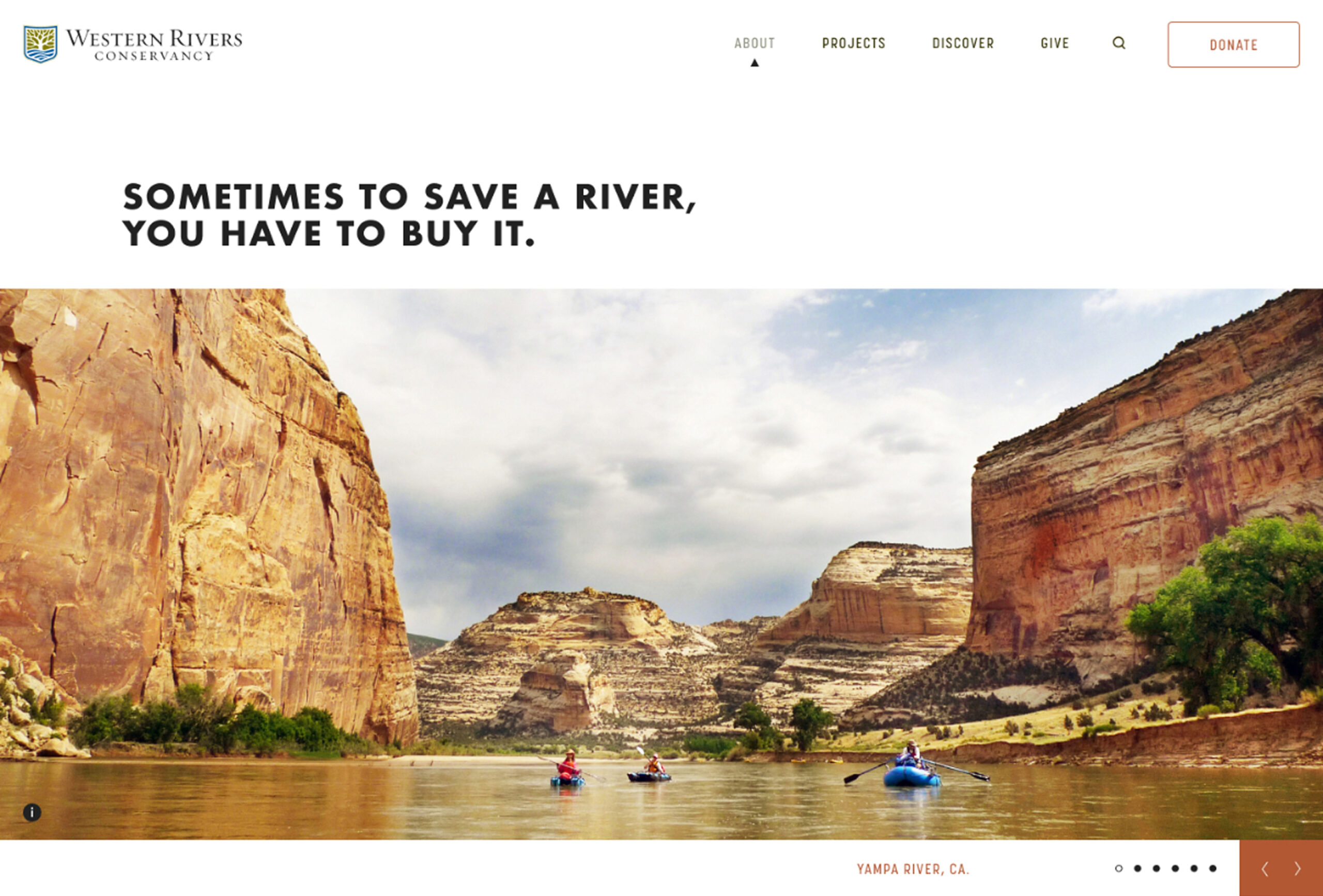
Western Rivers Conservancy (WRC) is a nonprofit dedicated to protecting riverlands across 11 Western states through strategic land acquisition. Their conservation work was well-documented, but the existing website didn’t reflect the scale of their impact or credibility. We created a new website and interactive project atlas that translates their efforts into a cohesive, engaging narrative.

My Role: Project Manager & Senior UI/UX Designer

Overview

The Opportunity

Our main objective with this project was to go beyond simply generating donations. We needed to convert visitors into believers in Western Rivers’ mission, fostering long-standing partnerships. By helping visitors understand the scale and importance of Western Rivers’ work, we could build the trust essential for both monetary contributions and land donations.

The Goals

  • Convey the scale and impact of their work
  • Showcase their unique model in the world of conservation
  • Inspire people, foundations, companies, and brands to support their work
  • Increase visibility to land owners who are seeking to sell their lands for conservation

The Approach

We combined Western Rivers’ reporting, project data, and immersive photography into a website that tells a compelling story, engages visitors with their work, and provides a clear path to contribute.

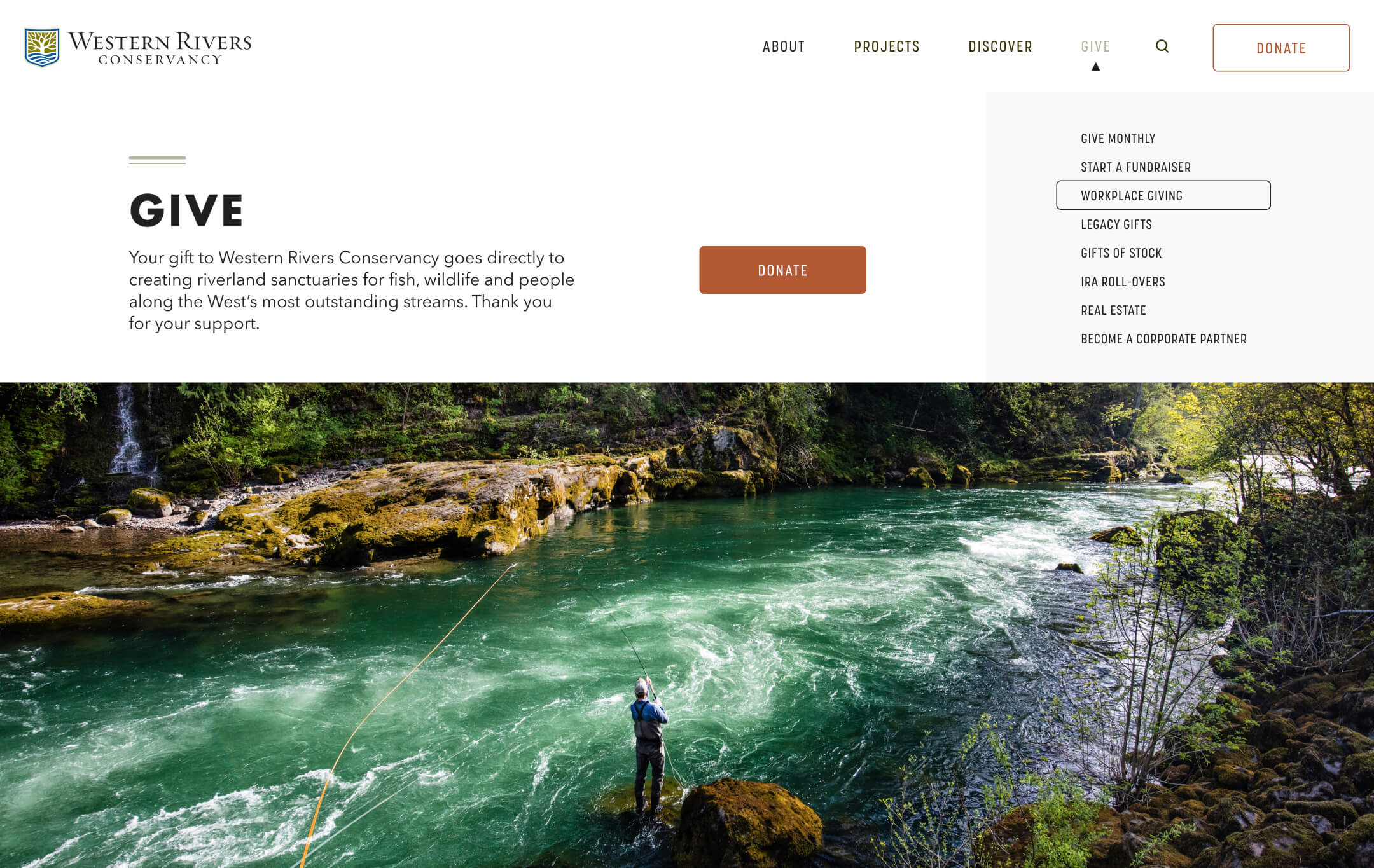
  • Grouped their efforts into broad navigation buckets that clarify scope and surface opportunities for engagement and giving
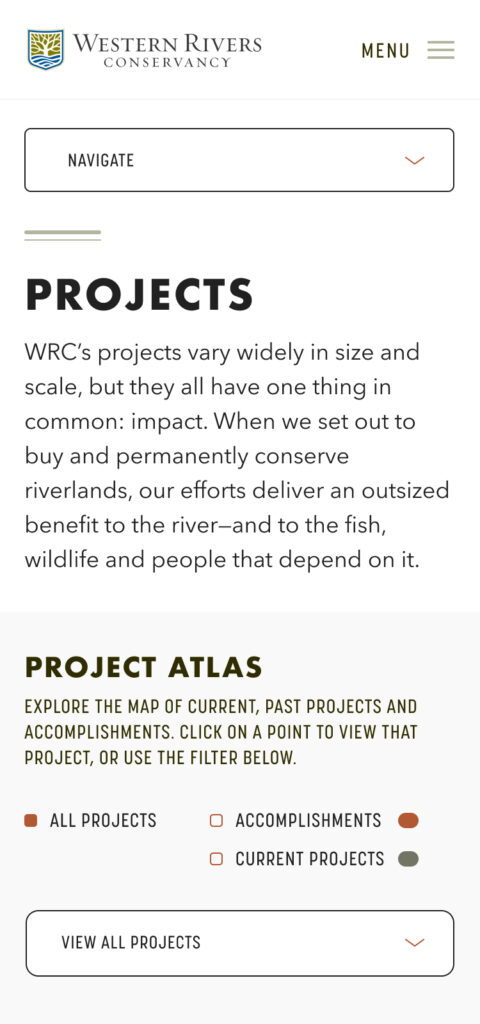
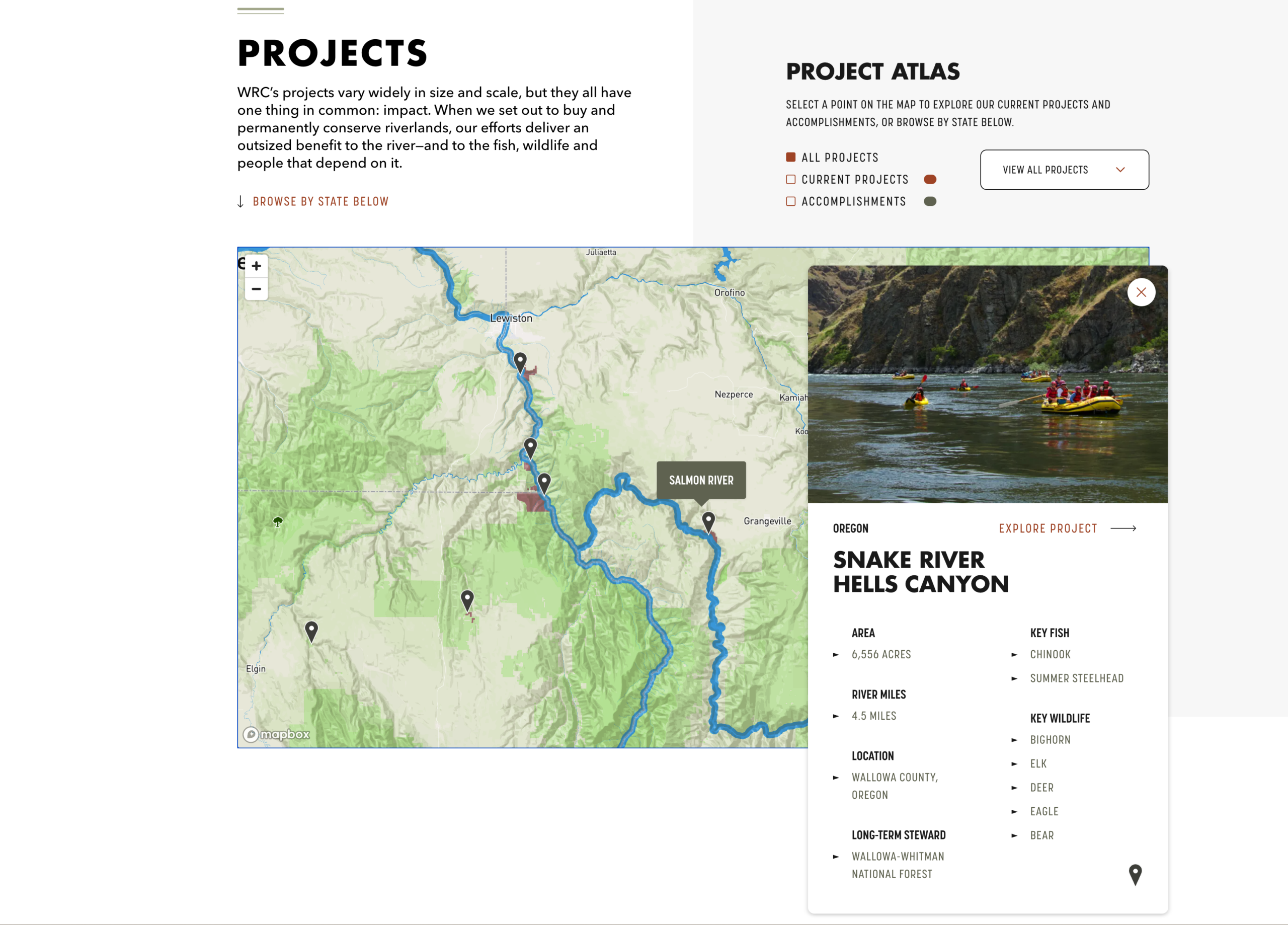
  • Designed an interactive Project Atlas to visualize the scale of their efforts and allow exploration of their conservation projects
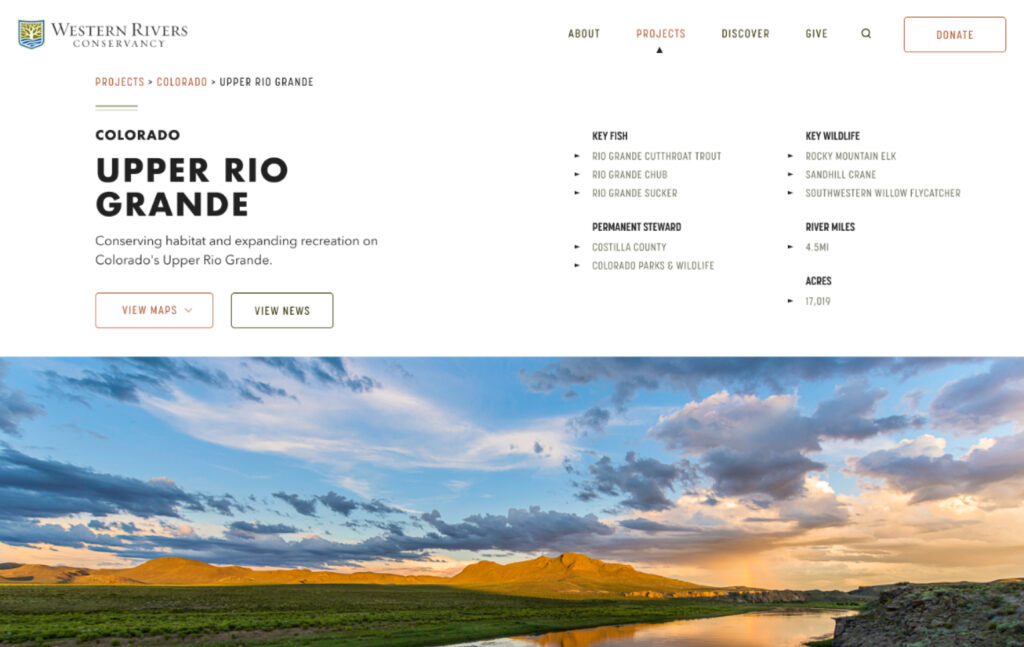
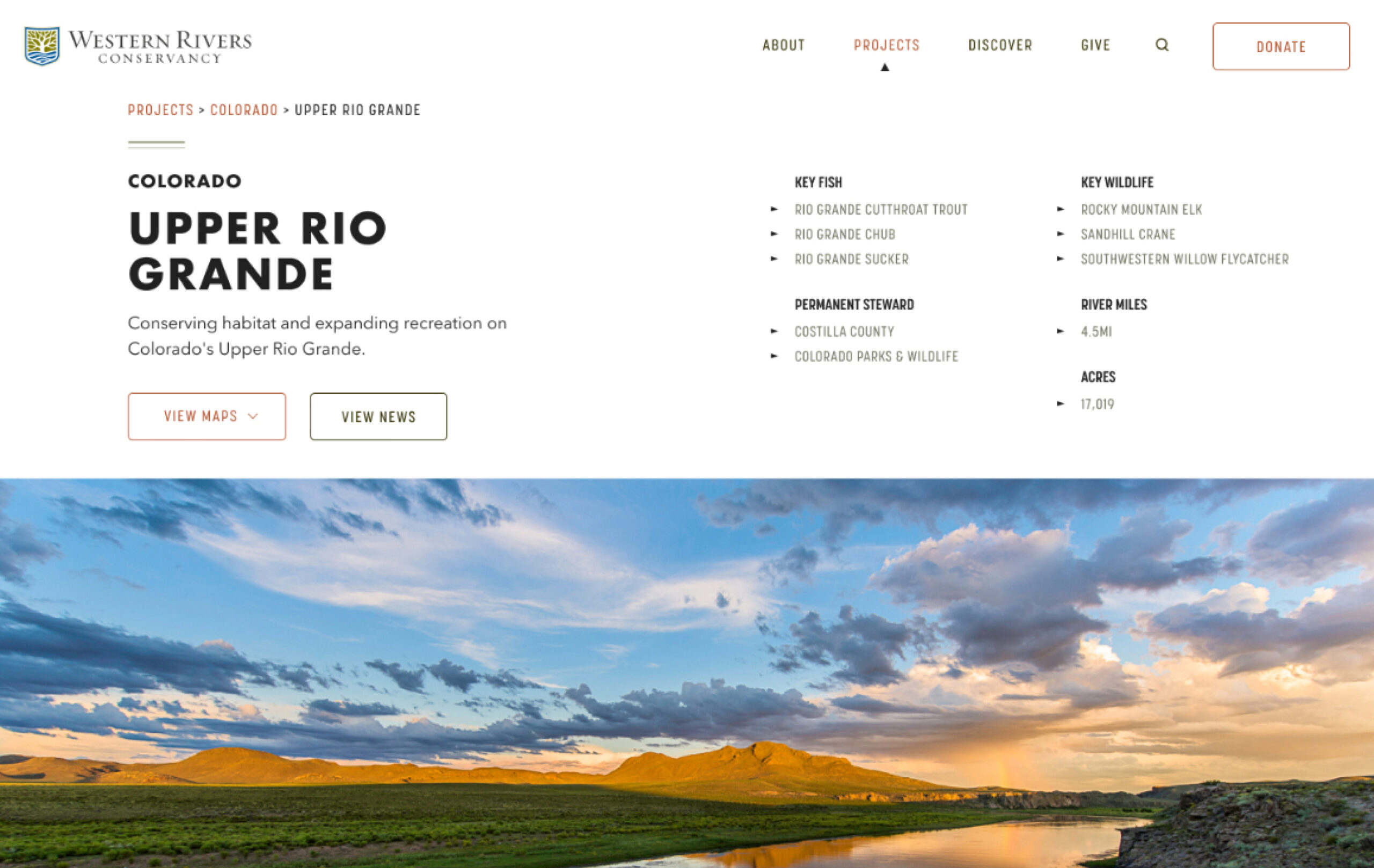
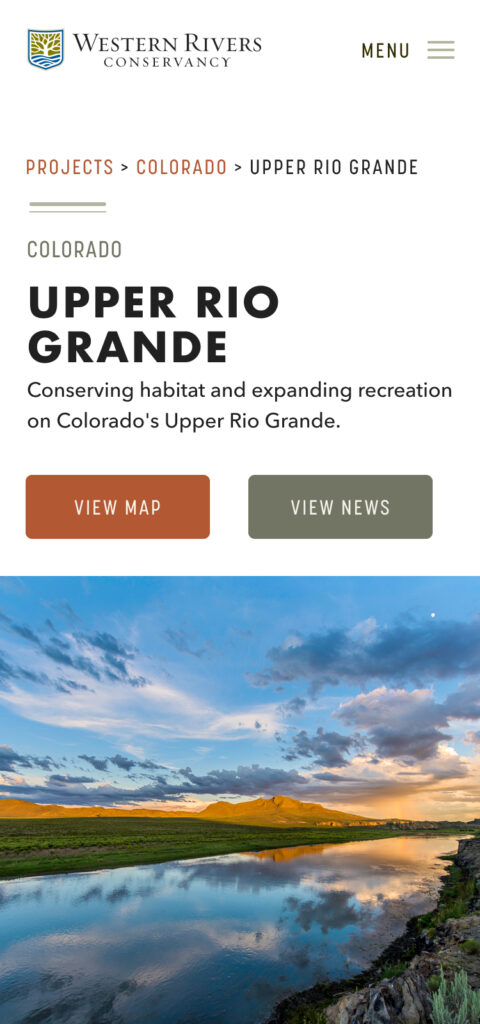
  • Developed detailed project templates highlighting protected acreage, river mileage, wildlife, and updates in the projects progression
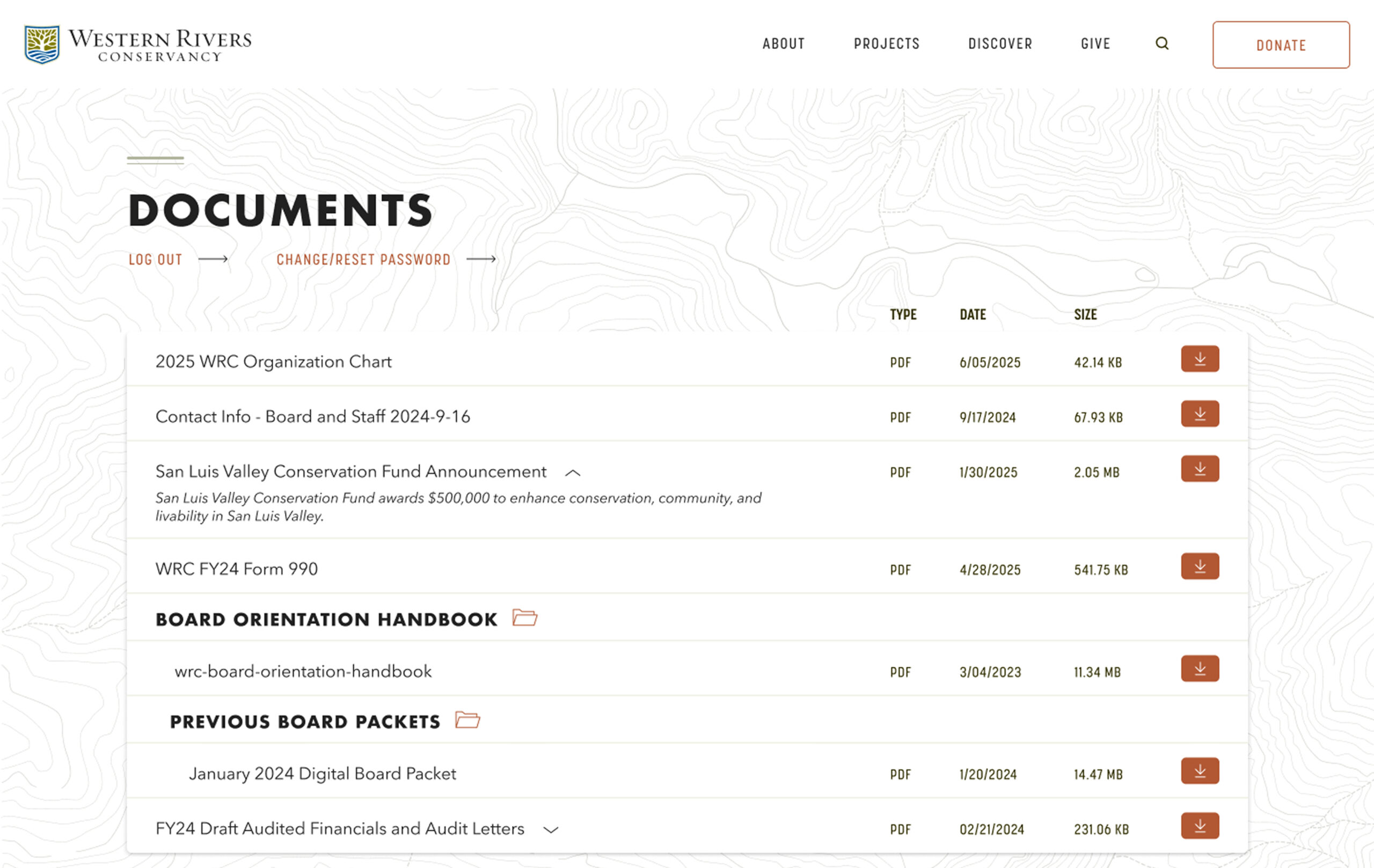
  • Centralized financial reporting and documentation to reinforce transparency
The Outcome

While multiple factors contribute to financial performance, the redesigned digital experience supported clearer communication, stronger trust signals, and improved engagement across key audiences.

34.6%

year-over-year Revenue increase

60.9%

Growth in Donations & grants
The Process

Let’s get into it.

The Process

Research & Discovery

Understanding Donors

Western Rivers’ core donor group is primarily male fly anglers between the ages of 40 and 70. We wanted to cater to their priorities while engaging a more diverse pool of recreationists (bikers, hikers, hunters) as well as landowners interested in permanent conservation.

These audiences share a strong attachment to specific rivers and landscapes. Their support is often rooted in personal experience (places they fish, hike, or hunt). To earn their trust and inspire action, the site needed to create a tangible connection between the places they love and the conservation work protecting them.

The Process

Ideation & Prototyping

Information Architecture

Western Rivers had an expansive digital footprint: financial reports, project updates, newsletters, educational features, webinars, blog posts, and eight different ways to give. While the content was robust, it lacked a clear hierarchy that guided users from discovery to action.

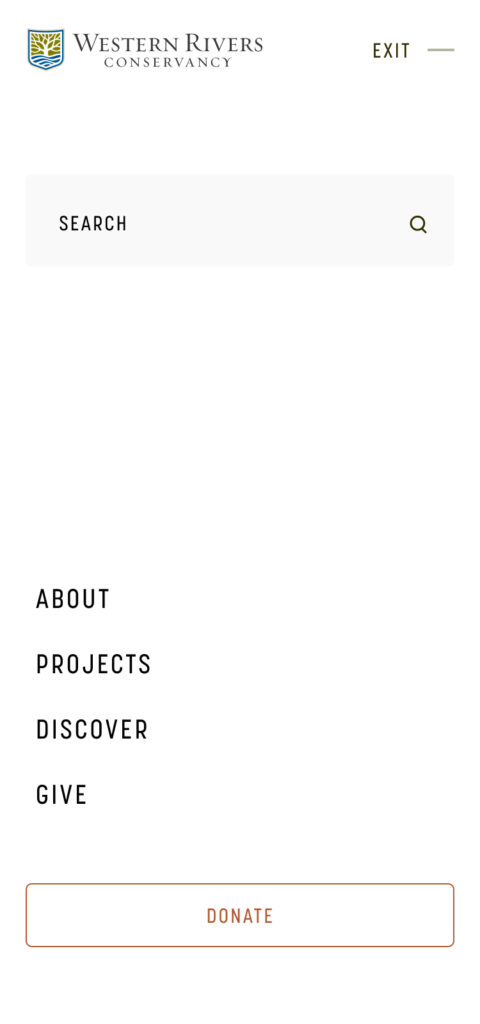
We consolidated the main navigation into four primary sections: About, Projects, Discover, and Give. Within each section, sub-navigation showed the breadth of their initiatives, including eight different ways to give.

Project Atlas: Exploration

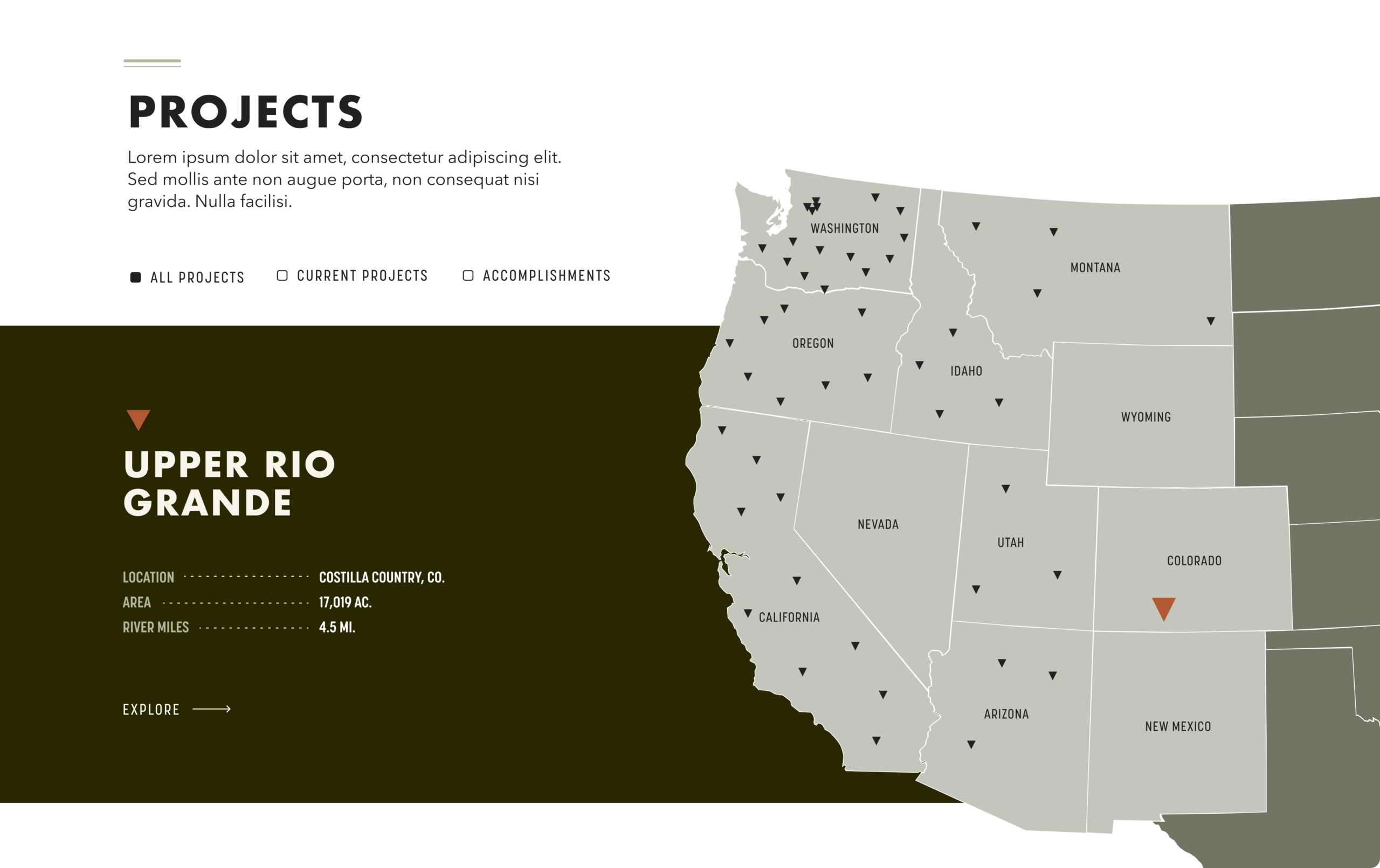
We created an interactive project atlas that allowed visitors to get a high-level overview of Western Rivers’ body of work. Early iterations explored what high-level content would best showcase the breadth of work while keeping visitors engaged and compelled to click.

Project Atlas: Initial Release

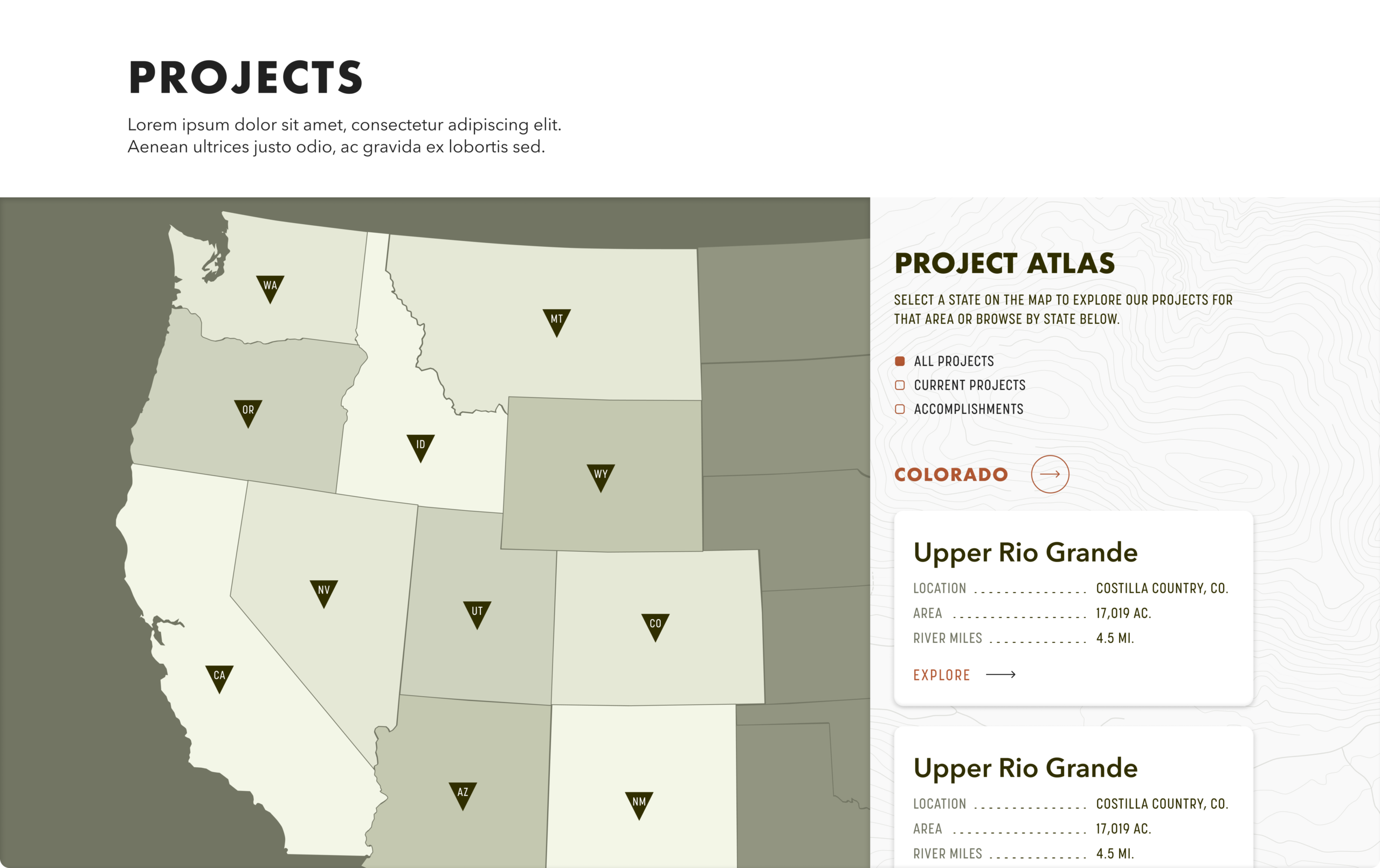
We felt a drill down approach would keep navigation and exploration cleanest. All projects could be browsed in a list view. The map would zoom into which ever state was currently displayed in the sidebar, revealing pins. Alternatively, users could click a state to scroll to its corresponding list of projects.

Project Pages

While the atlas communicates scale, individual project pages provide depth. Each page details acreage, habitat value, conservation milestones, and related reporting, giving visitors visibility into long-term stewardship.

For individual donors, this reinforces that contributions protect real places. For foundations and high-net-worth supporters, it demonstrates operational rigor and measurable outcomes. For landowners, it signals credibility and permanence.

The Process

Post-Launch Refinement

Project Atlas: Evolution

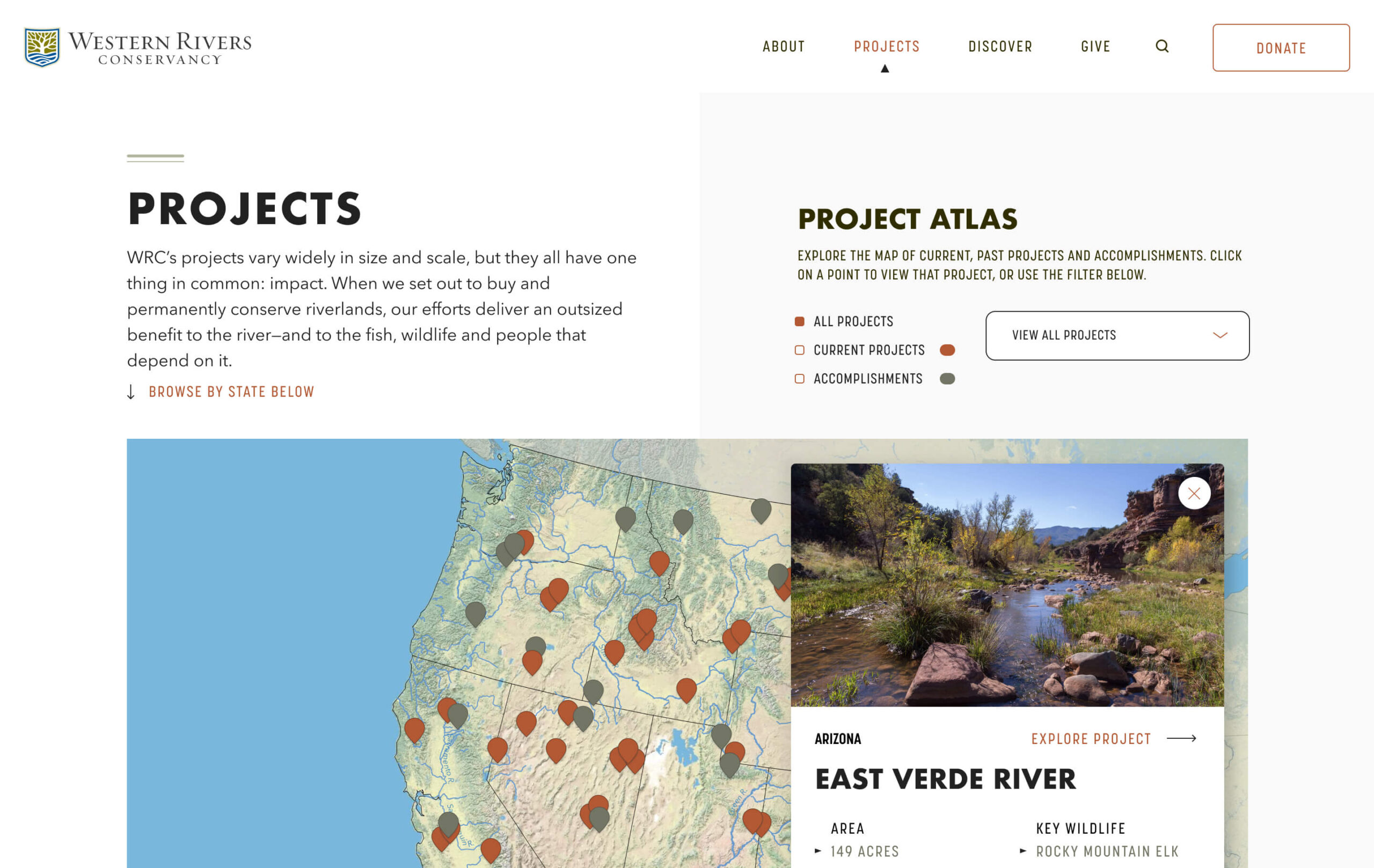
Plot twist! After launch, we were able to see how users interacted with the atlas and understand where friction points existed.

  • Overall, a more visual, immersive experience better aligned with the original project goals.
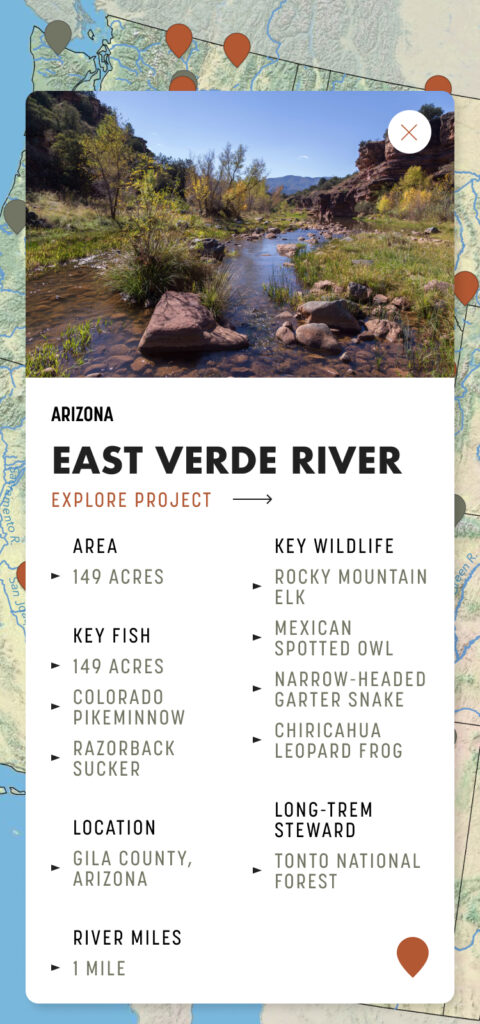
  • Having all pins visible on page load allows users to quickly grasp the full breadth of their impact.
  • A modal for each project gave us more flexibility in the amount of content we could share, including compelling imagery.
  • With the modal approach, we could list all of the projects in a simplified dropdown menu, allowing for faster navigation.
  • Between the map, dropdown menu, and browse-by-state below, users now had three very distinct modes for learning about projects.
The Results

How it all came together.

Scroll to Top