Adventure Wagon

Van Configurator & eCommerce Website

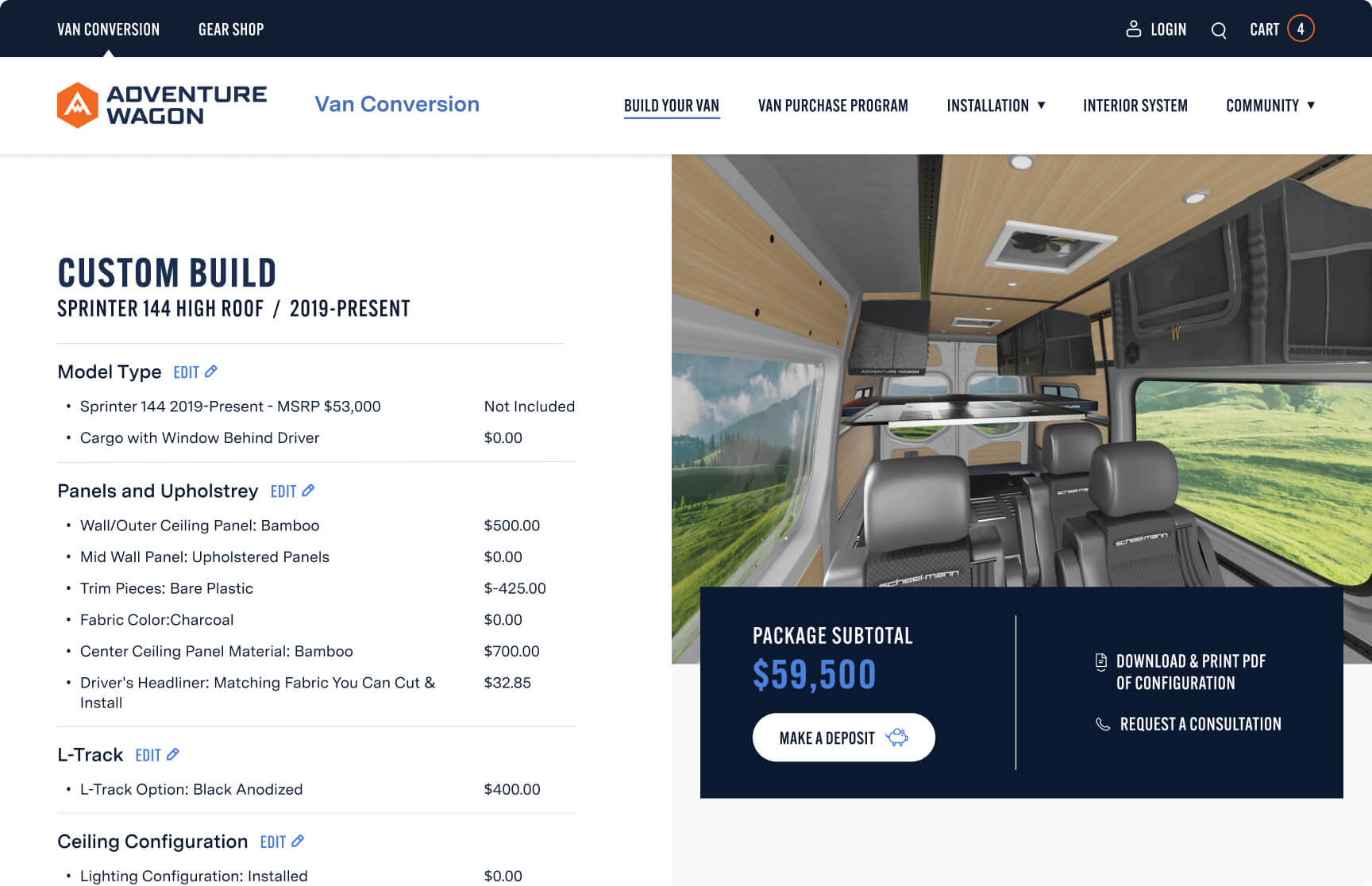
Adventure Wagon bridges the gap between DIY van builds and high-end custom outfitting. We designed an immersive van configurator that allows customers to visualize, customize, and price their build in real time, reducing intimidation around cost, complexity, and technical expertise.

My Role: Project Manager and UX Strategist

Overview

The Opportunity

As interest in custom adventure vans grew, many potential buyers were overwhelmed by the complexity and perceived cost of the build process. Existing solutions were either rigid, expensive, or required deep technical knowledge.

The Goals

  • Simplify a highly complex decision-making process without sacrificing flexibility
  • Support both guided and fully custom build paths
  • Keep users engaged in the “dream build” experience while reducing decision fatigue

The Solution

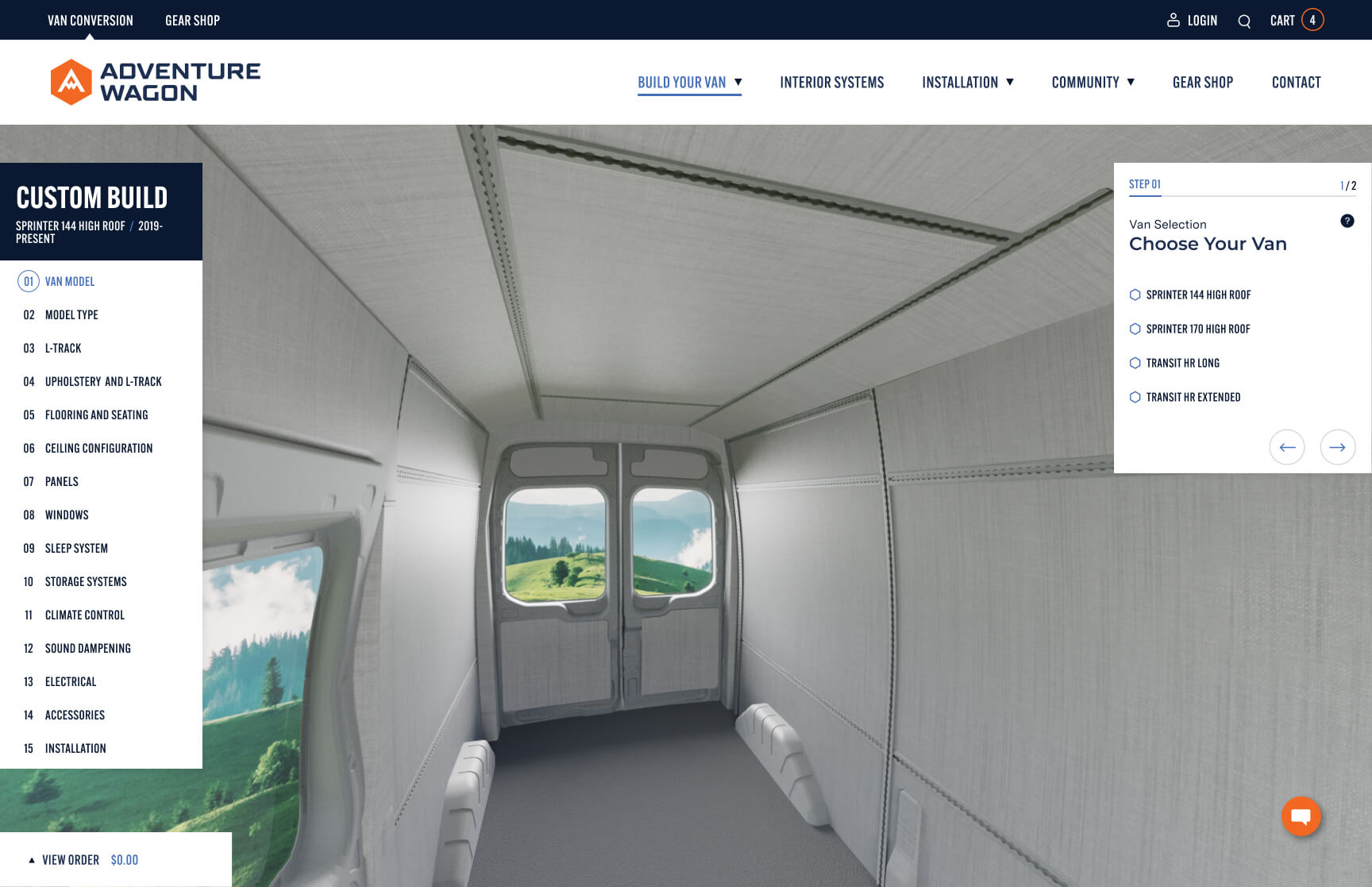
We created an interactive 3D rendering tool that allows users build out their dream adventure van with full customizability.

  • Real-time rendering lets users see their van evolve with each decision
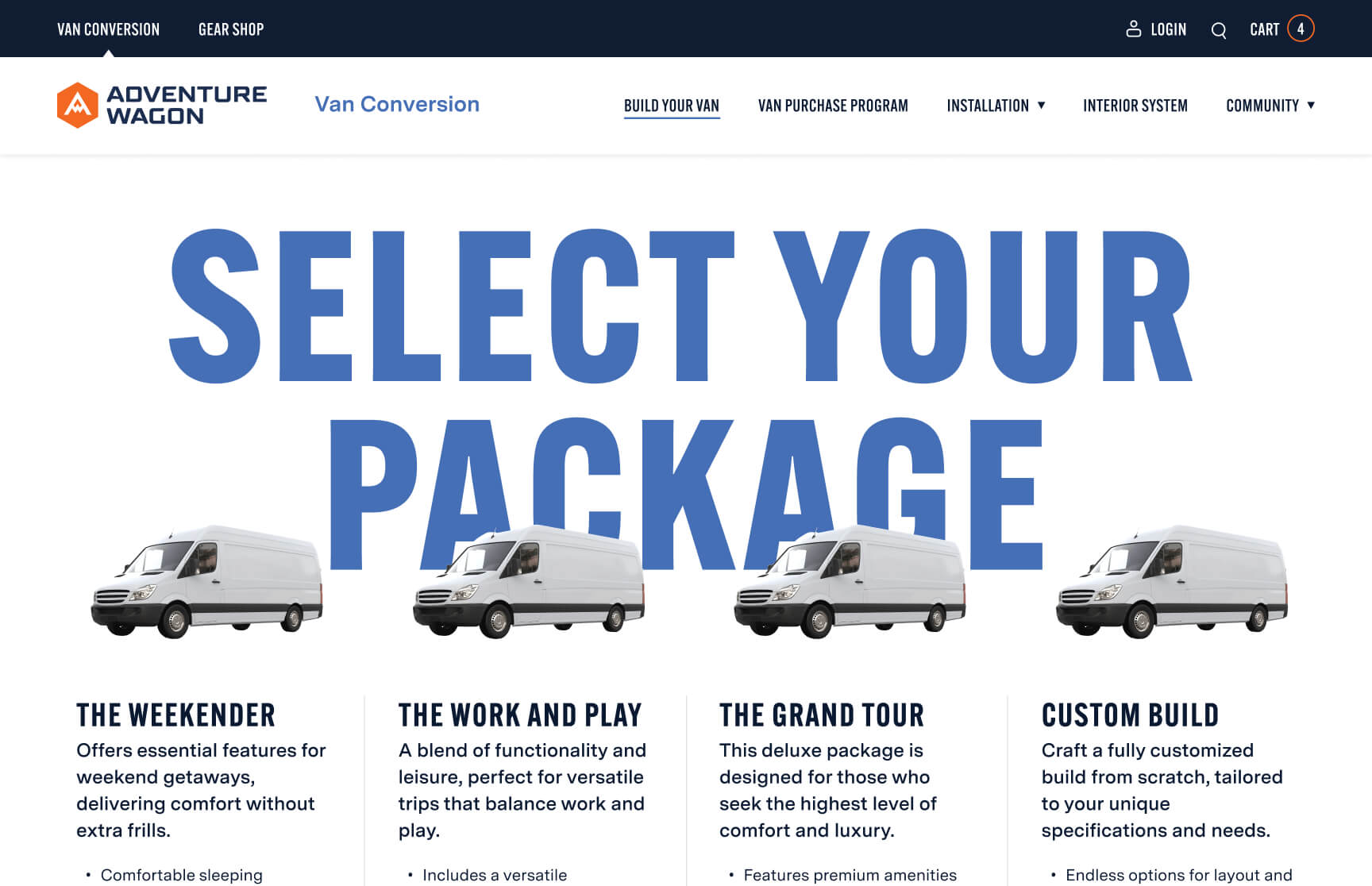
  • Pre-built packages offer a fast entry point, while full customization supports deeper involvement
  • Subway-style navigation provides structure while allowing users to move freely between steps
  • Tooltips and modals surface education without pulling users out of the flow
  • Post-launch: Targeted add-on recommendations within the configurator and a standalone Gear Shop for broader product exploration.
The Outcome

Adventure Wagon’s launch of a fully customizable configurator set a new industry standard, giving them a significant competitive edge. This innovation not only enhanced customer engagement but also positioned Adventure Wagon as a market leader in customization and customer education.

Detailed metrics available upon request.

The Process

Let’s get into it.

The Process

Research & Discovery

Target Audiences

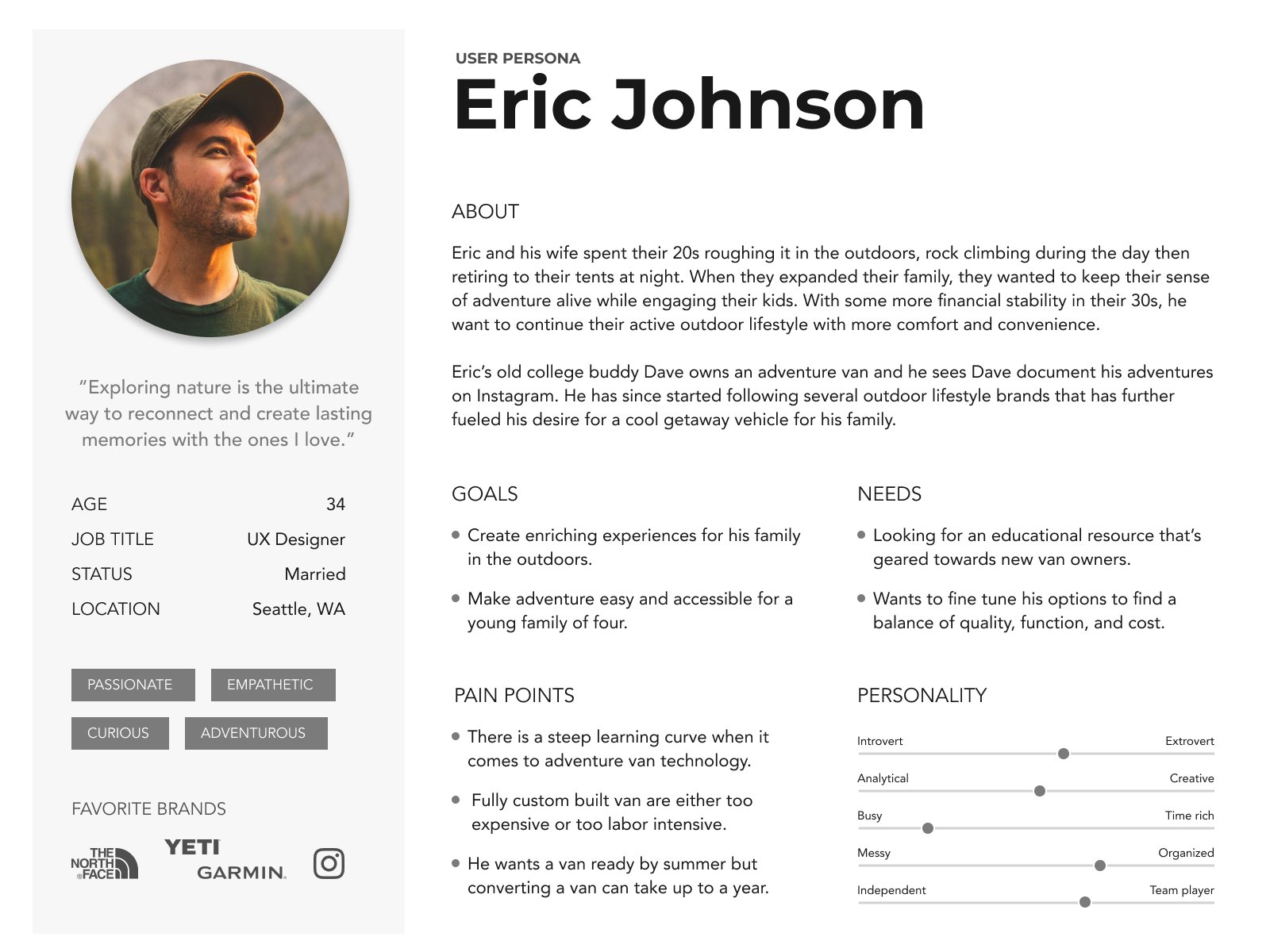
Adventure Wagon’s target market is diverse, ranging from families to hardcore outdoor enthusiasts. Despite a broad audience, the core need was consistent: exploration without technical overwhelm.

Market Landscape

Adventure Wagon’s configurator would be a first of its kind within the van build industry. Most of their competitors required contacting a sales team before any options could be explored, which would be enough of a barrier to lose many of their curious customers. Adventure Wagon had an opportunity to leapfrog competitors by offering a guided yet deeply customizable experience tailored to first-time van builders.

We explored configurators in adjacent industries (custom bikes, car dealerships) and found most experiences were either overly simplistic or rigid in their ability to explore and learn.

The Process

Ideation & Prototyping

Entry Points/User Flow

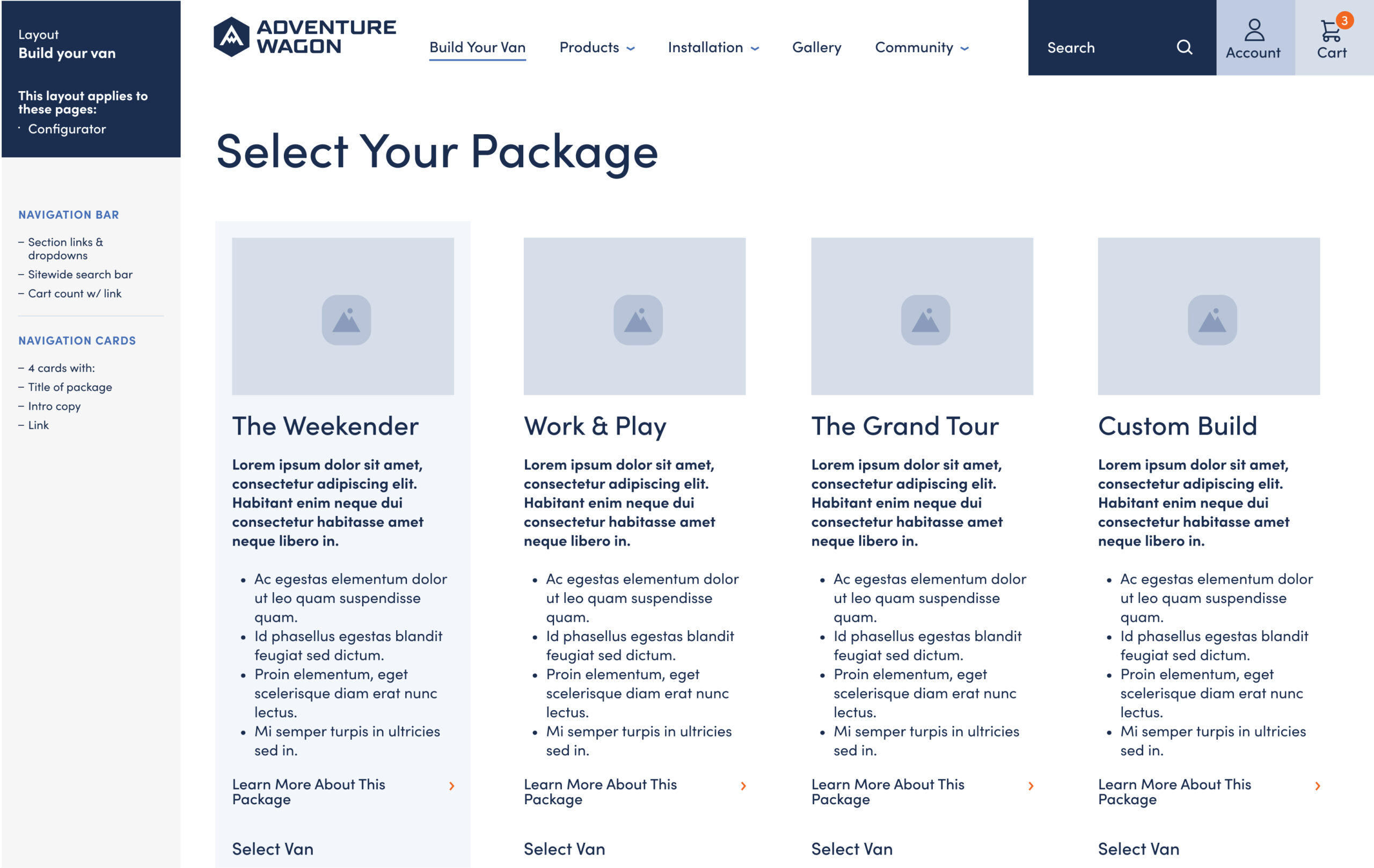
A key challenge was balancing a linear configurator with the freedom to explore. We needed to meet customers wherever they were at in their van-build journey.

We identified two distinct user mindsets: users who already owned a van and wanted to customize it, and users who were still evaluating what was possible and would choose a van based on its build potential. To support both, we designed two primary entry paths:

  • Van-first, for users starting with a specific vehicle they already own
  • Package-first, for users exploring pre-built packages to understand capabilities and compare options before selecting a van model
Interface Design

Once inside the configurator, there are an overwhelming number of decisions to make, each with complex technical considerations.

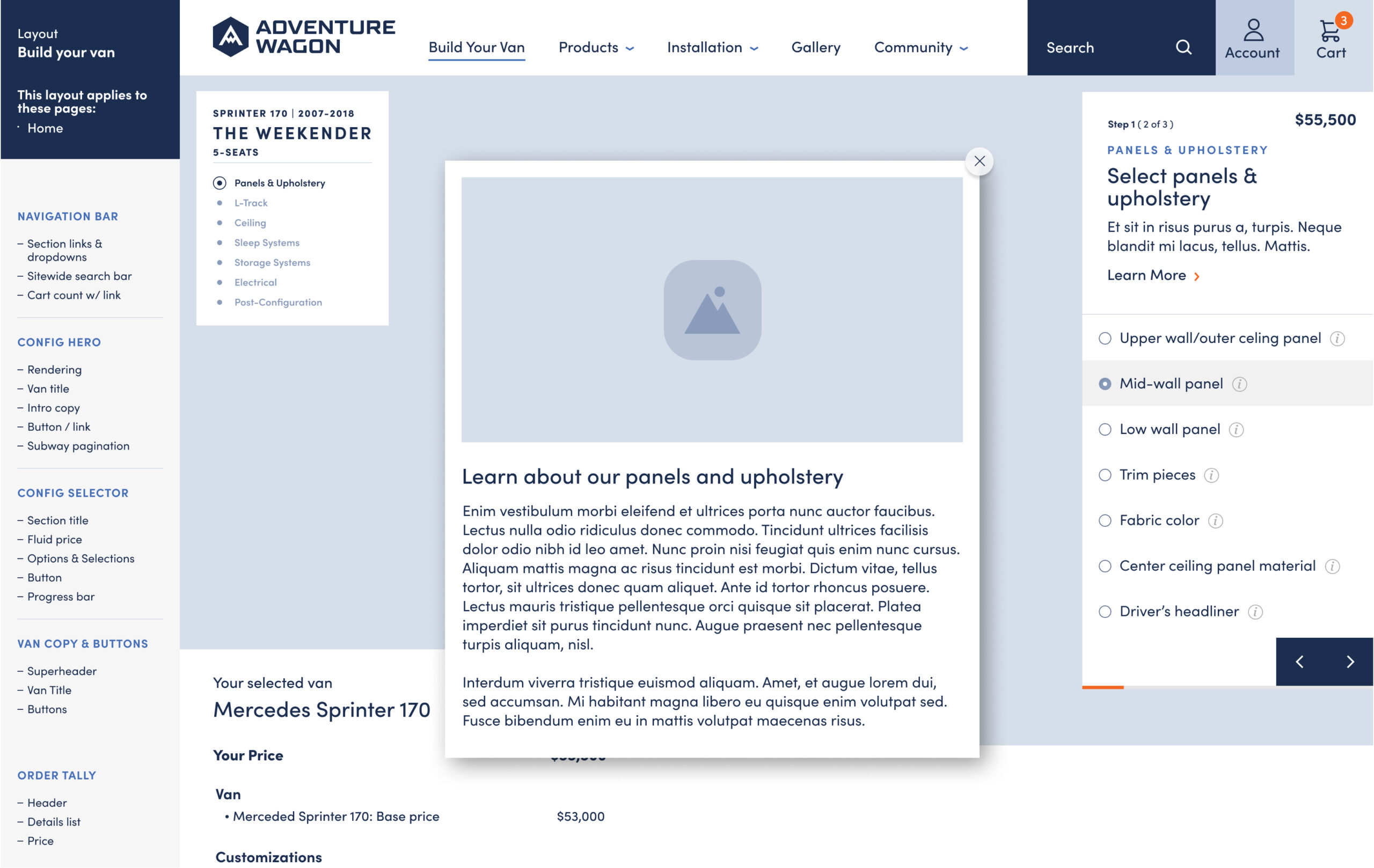
We added a subway navigation to provide a clear overview of the build process, also allowing users to follow a linear path or skip around. If a customization is causing friction, it can be skipped and returned to later.

In the selection panel to the right, critical decision-making information is visible by default, while supplementary details live in modals, reducing cognitive load without hiding complexity.

3D Renderings

One technical consideration was the performance of the configurator with all of the rendering options. The ideal solution would’ve been a true 3D model, with the ability to pan, zoom, and rotate within the build. However, we identified a lot of performance issues in this approach when interacting with configurators in adjacent industries (custom bikes, car dealerships).

We instead opted for a model that was technically 2D but gave the appearance of 3D. We partnered with digital artist Samuel Costa to render all possible configuration permutations in a 3D perspective.

The result maintained the integrity of a true 3D experience, allowing realistic visualization of how components and finishes would appear inside the space. This was critical in elevating the customization process into something aspirational and interactive rather than a transactional form.

The Process

Expansion & Refinement

Add-Ons

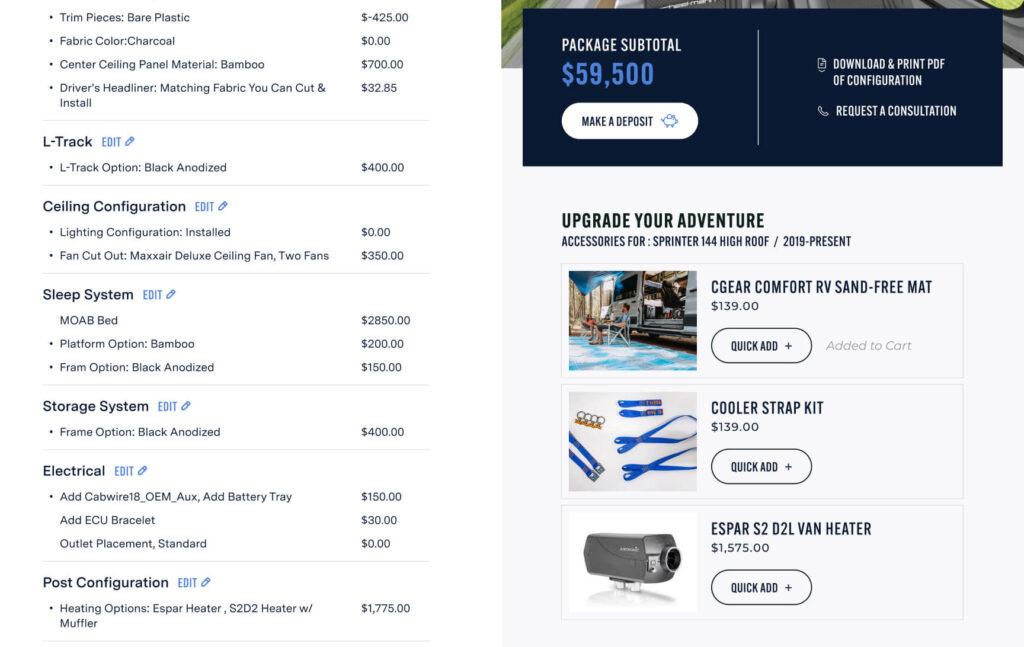
Post-launch behavior showed that once users completed their van configuration, they were highly committed and open to extending their build. Based on this insight, we introduced a small set of recommended add-on products at the end of the configurator. These “quick add” items allowed for easy upsells without reintroducing decision fatigue or disrupting the core build flow.

Gear Shop

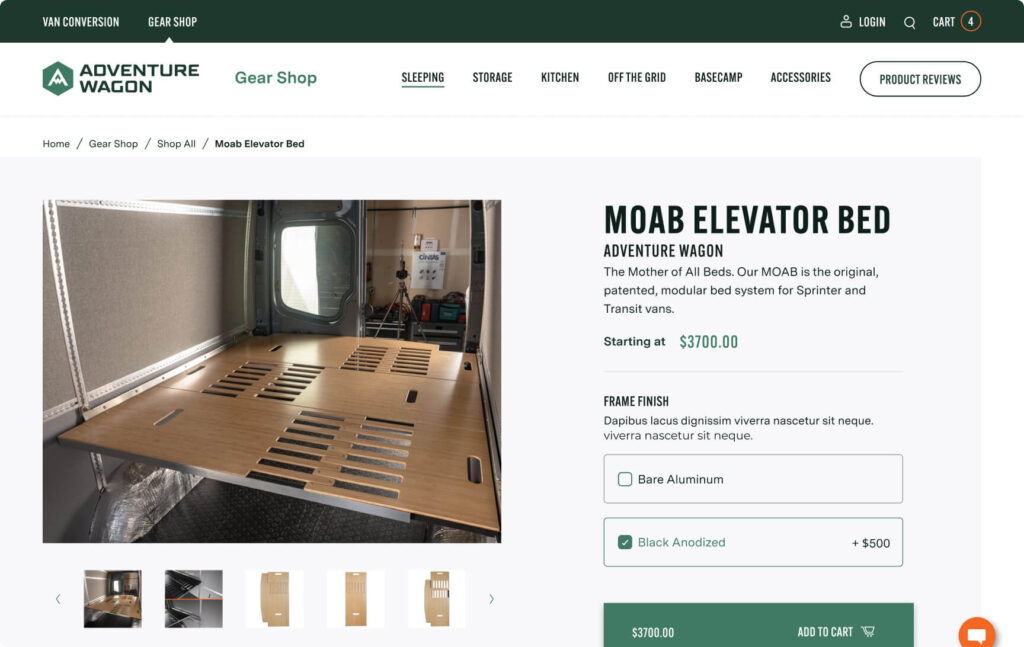
We then identified a separate need for a more traditional ecommerce experience for customers browsing gear outside of a van build. This led to the creation of a standalone Gear Shop, designed for discovery, comparison, and repeat purchases.

We unified navigation and checkout across the configurator and Gear Shop, allowing users to move between customization and shopping seamlessly while maintaining a cohesive purchasing experience.

The Results

How it all came together.

Scroll to Top