Adventure Wagon

Van Configurator & eCommerce Website


Adventure Wagon sits between DIY van builds and high-end custom outfitters, a market where most competitors required a sales call before a customer could explore any options. That friction was losing curious buyers before a relationship could even begin.

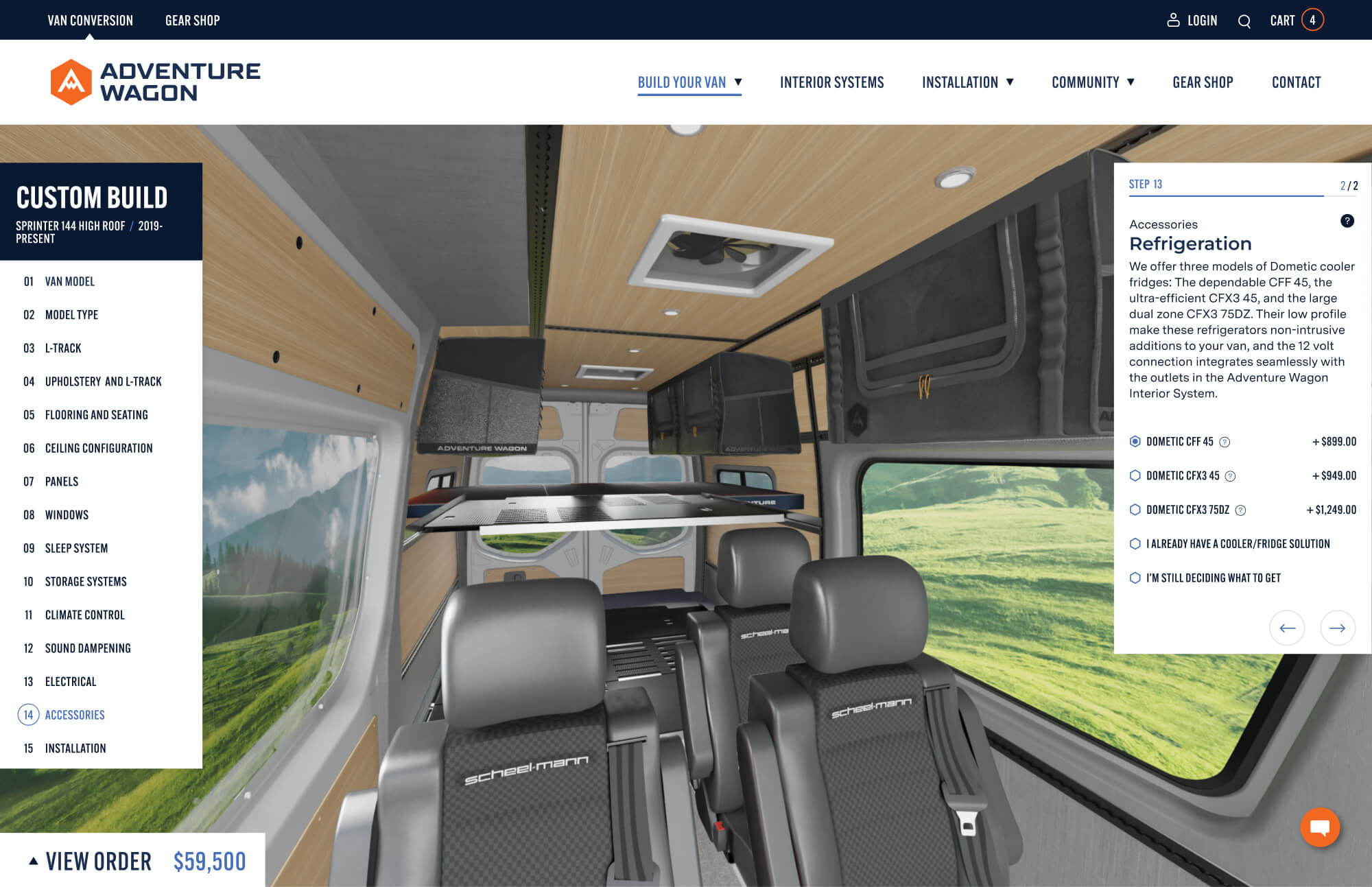
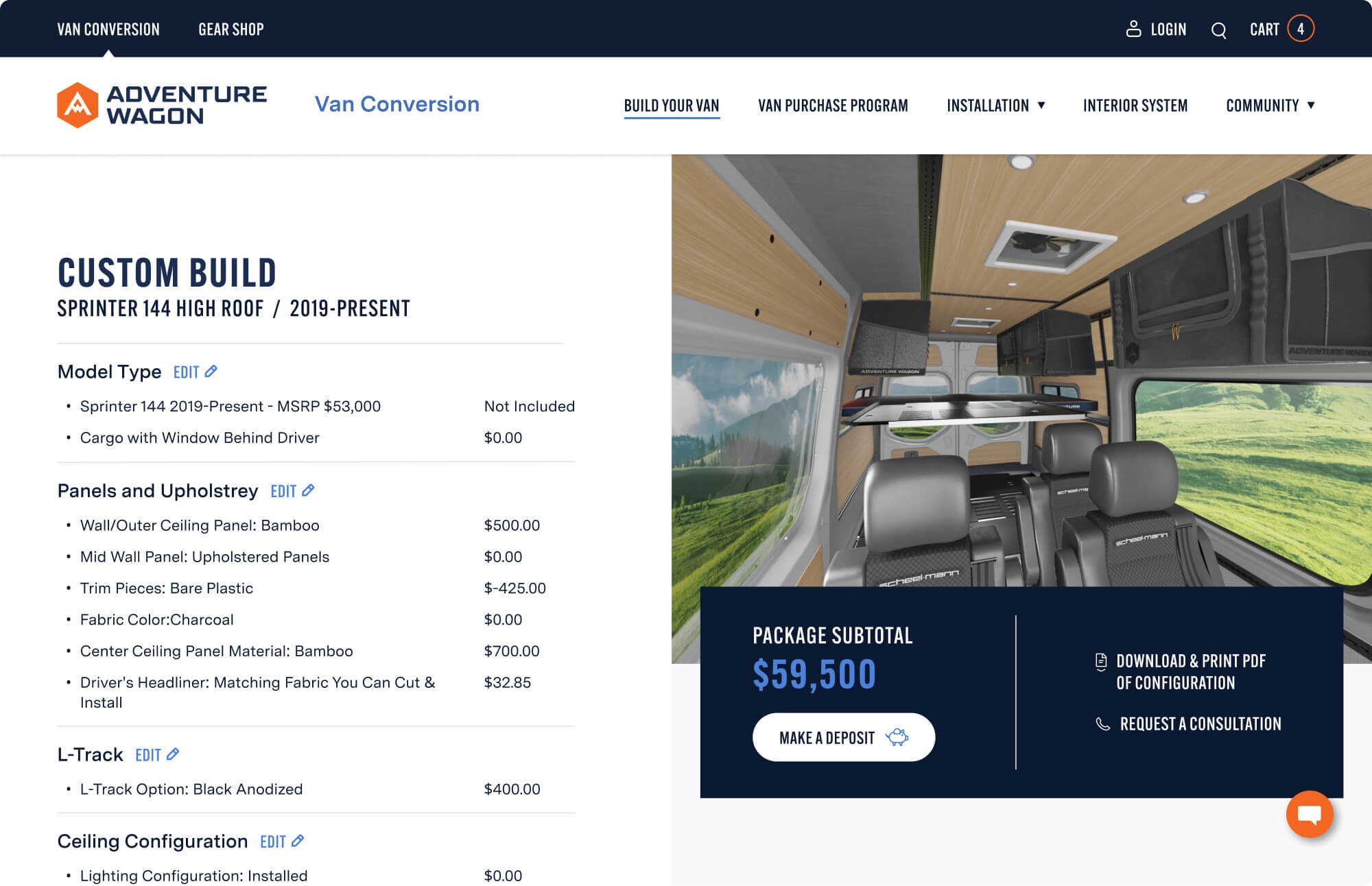
We designed an immersive van configurator that lets customers visualize, customize, and price their build in real time.

Overview

The Goals

  • Simplify a highly complex decision-making process without sacrificing flexibility or depth
  • Support both guided and fully custom build paths
  • Reduce perceived barriers around cost, complexity, and technical expertise
  • Keep users engaged in the “dream build” experience while reducing decision fatigue

My Role

I led this project from end-to-end as UX Strategist and Project Lead. I handled all client communications and independently conducted the competitive research and configurator audit. Much of the configurator’s architecture was collaborative, but I specifically owned:

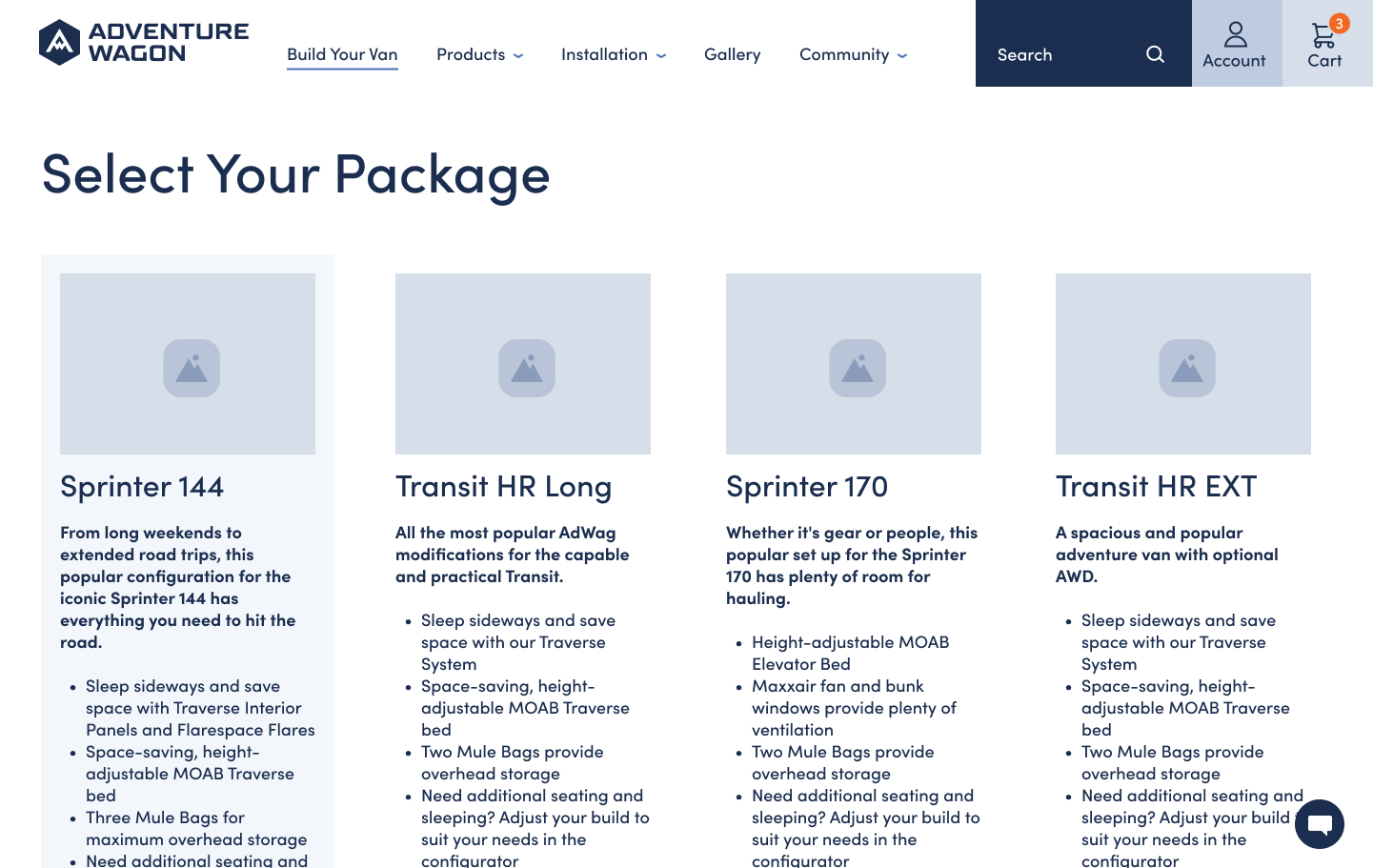
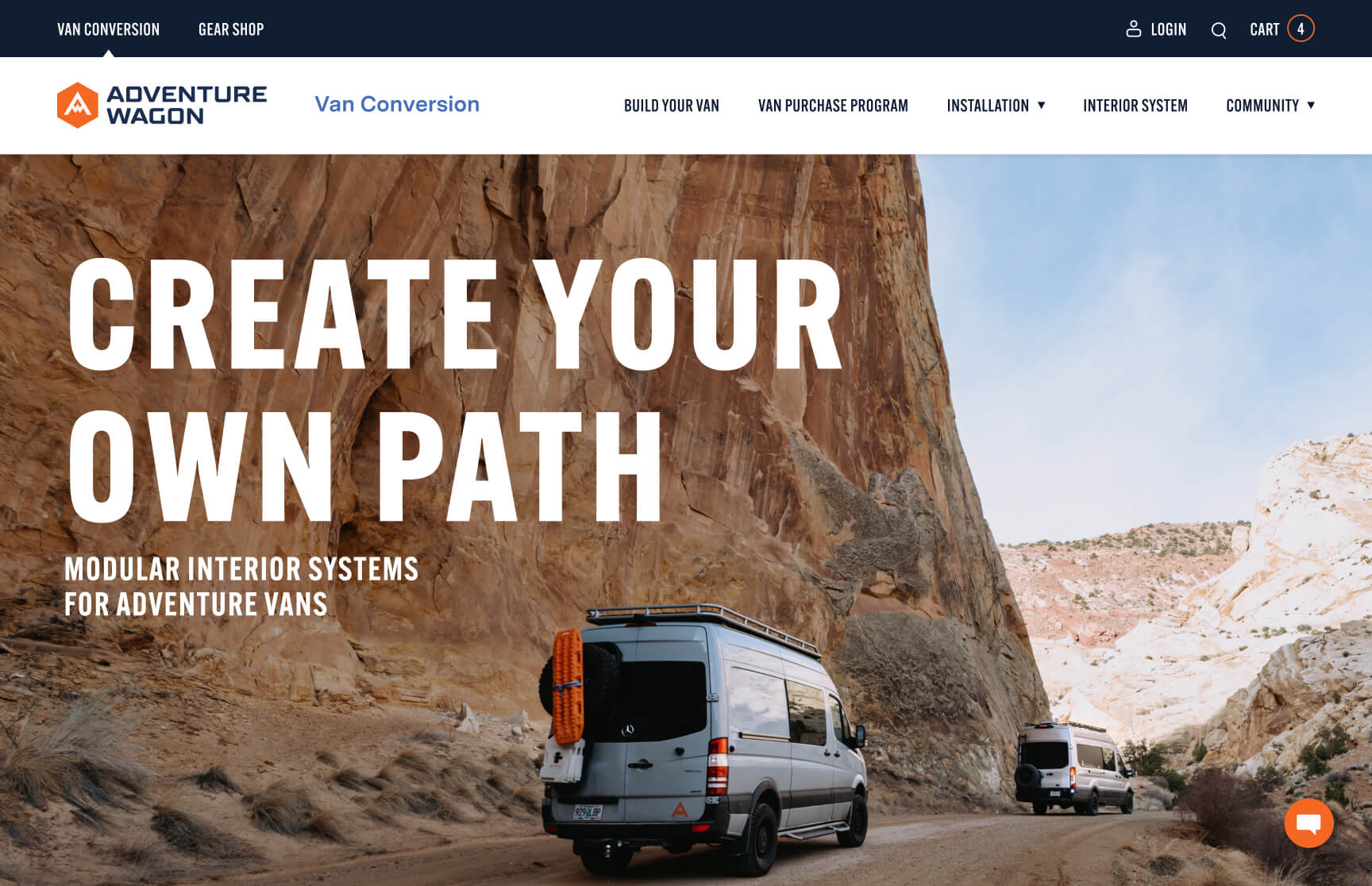
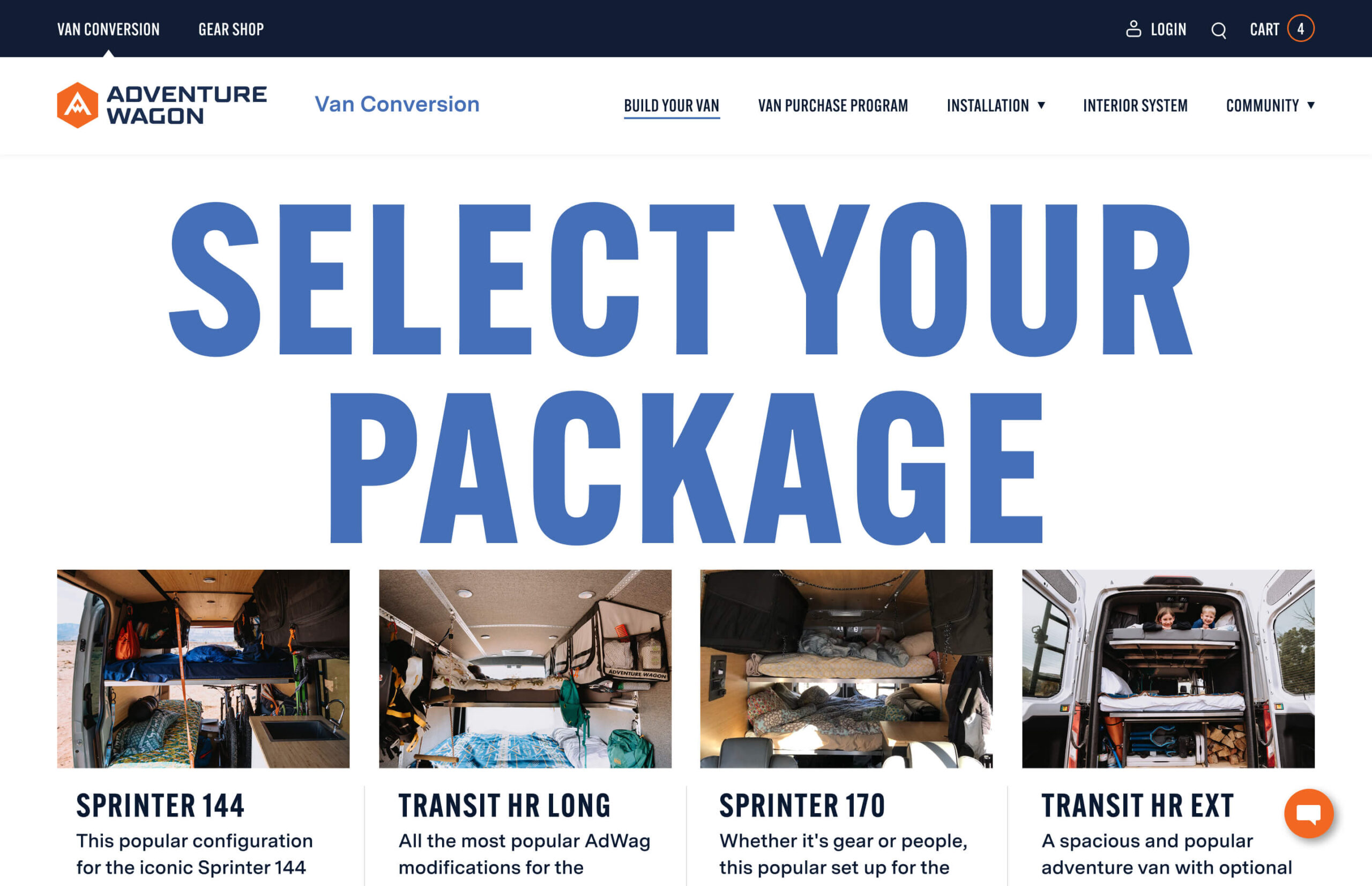
  • Designed the end-to-end entry experience from the Adventure Wagon website into the configurator, including a package comparison page that educated customers and reduced decision friction upstream of the build flow
  • Owned key decisions within the configurator experience, including how package selection would affect the customer’s path through the build flow, ensuring customers still clicked through the full configurator to select finishes and encounter upsell opportunities rather than skipping ahead
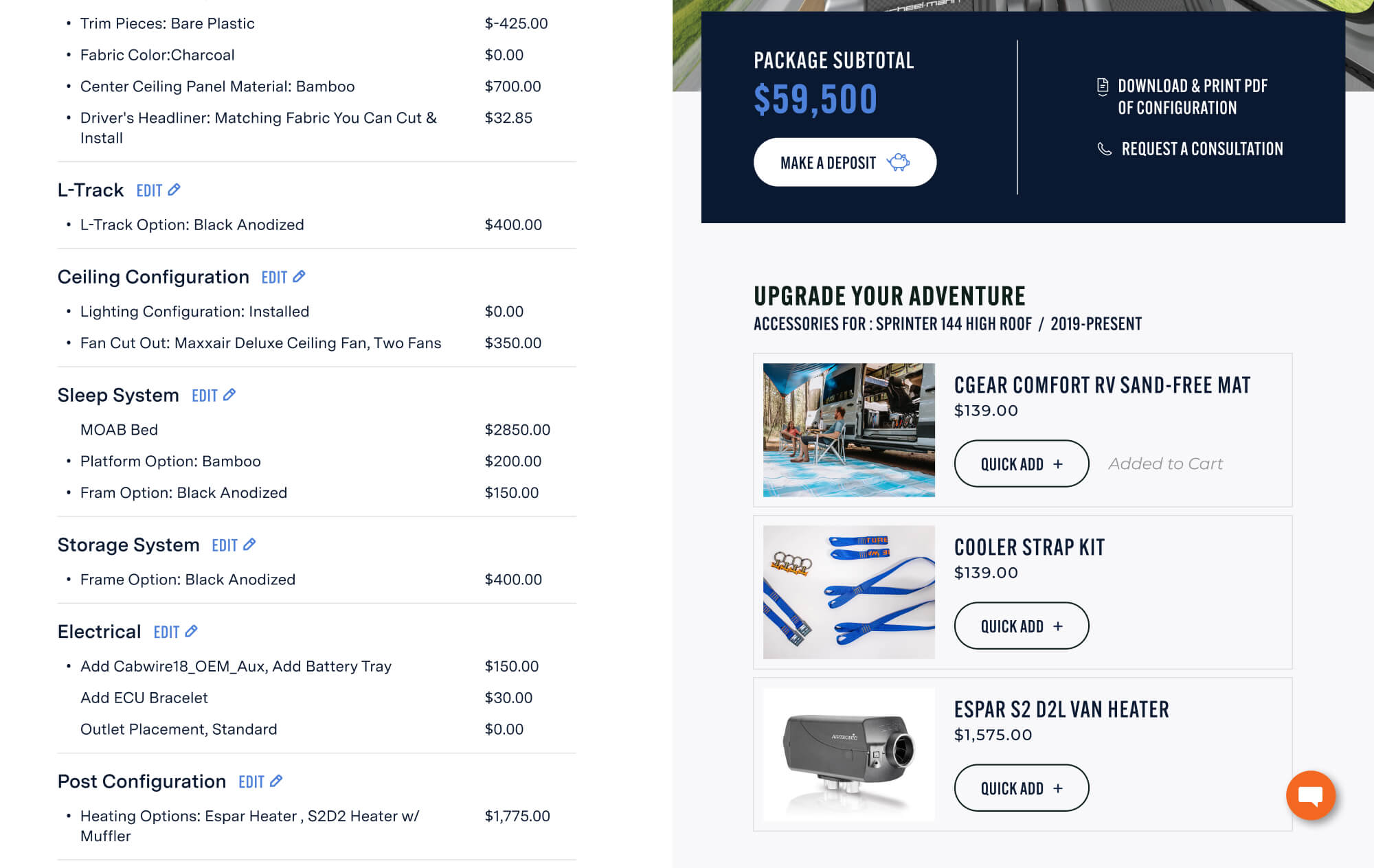
  • Designed the add-on experience at the end of the configurator, surfacing complementary products to committed buyers without reintroducing decision fatigue
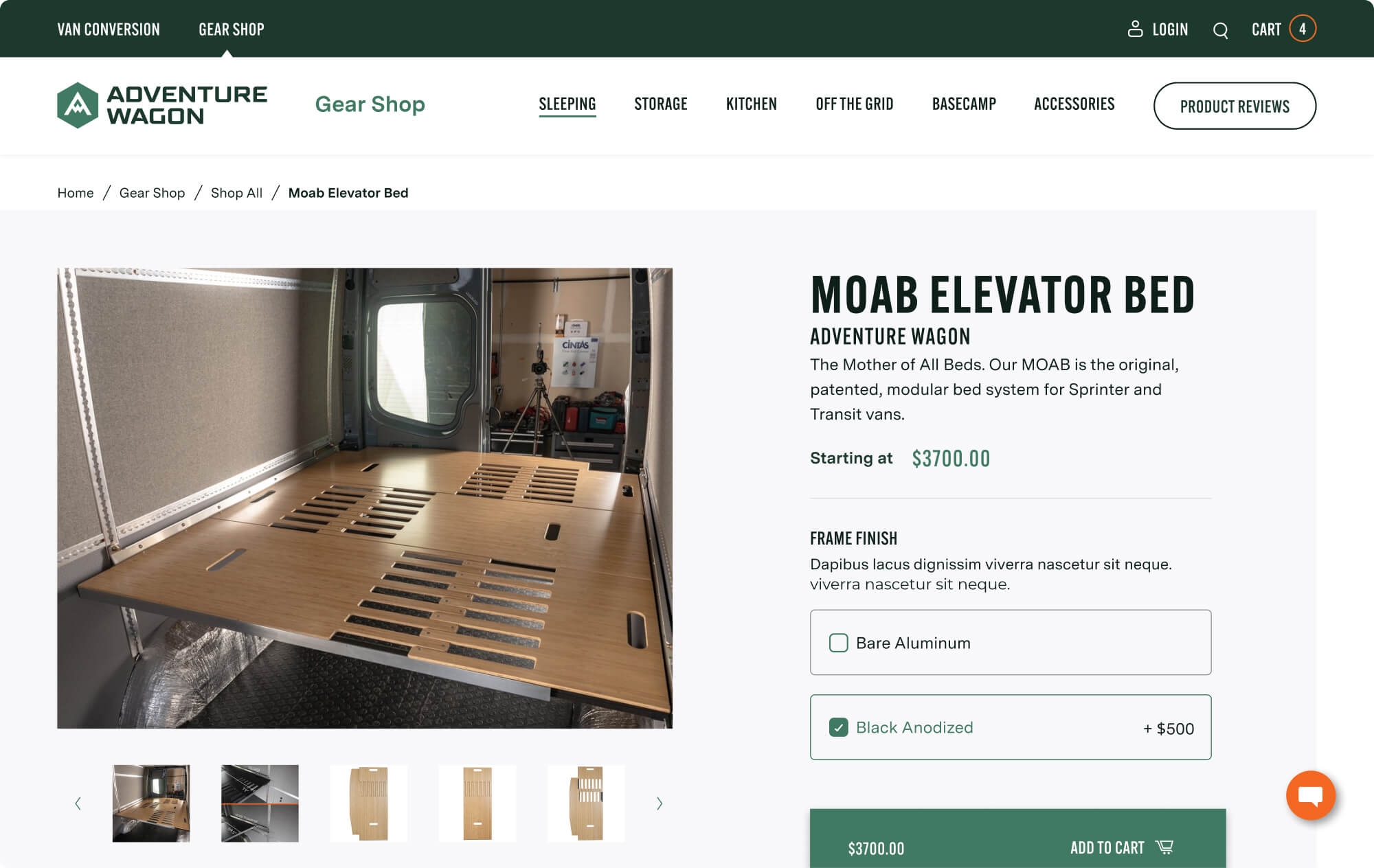
  • Designed the Gear Shop, a standalone e-commerce experience for customers purchasing accessories and van components outside of a configured build
  • Identified critical package compatibility issues during pressure testing and led the strategic recommendation to reposition the package architecture, shifting from a van-agnostic model to one package per van optimized for its specific use case
  • Conducted a conversion optimization audit of the existing homepage and redesigned its structure to better capture and convert new visitors

Visual design was established by our web designer. I then took over designing all post-launch features.

The Outcome

The configurator launched as the first self-serve van build tool in the industry, eliminating the sales call barrier that defined the competitive landscape. The site now generates approximately 250 custom configurations per year, with orders starting at $20,000 and frequently exceeding $50,000.

“The mission for the site was to provide the best user experience in the van conversion industry. Murmur delivered a beautiful site with a visual configurator that allows potential customers to completely customize their build. The site increased engagement by lowering bounce rates and increasing session duration. It also solidified Adventure Wagon’s position as a leader in our industry. Mission accomplished.”
Kurt Schreiner, Marketing Director at Adventure Wagon

250

configurations/year

+31%

Gear Shop Gross Sales

+50%

Homepage Sessions
The Process

Let’s get into it.

The Process

Research & Discovery


I began with a competitive audit of configurators across adjacent industries (custom bikes, car dealerships, outdoor gear) and found a consistent pattern: tools were either overly simplified or so rigid they couldn’t support real exploration. None were designed for someone still evaluating whether a van build was even possible for them.

That insight shaped our core design challenge: how do you build a tool that works for both the customer who already owns a van and knows exactly what they want, and the customer who is still figuring out if this is something they can do at all?

The Process

Key Design Decisions

Interface Design

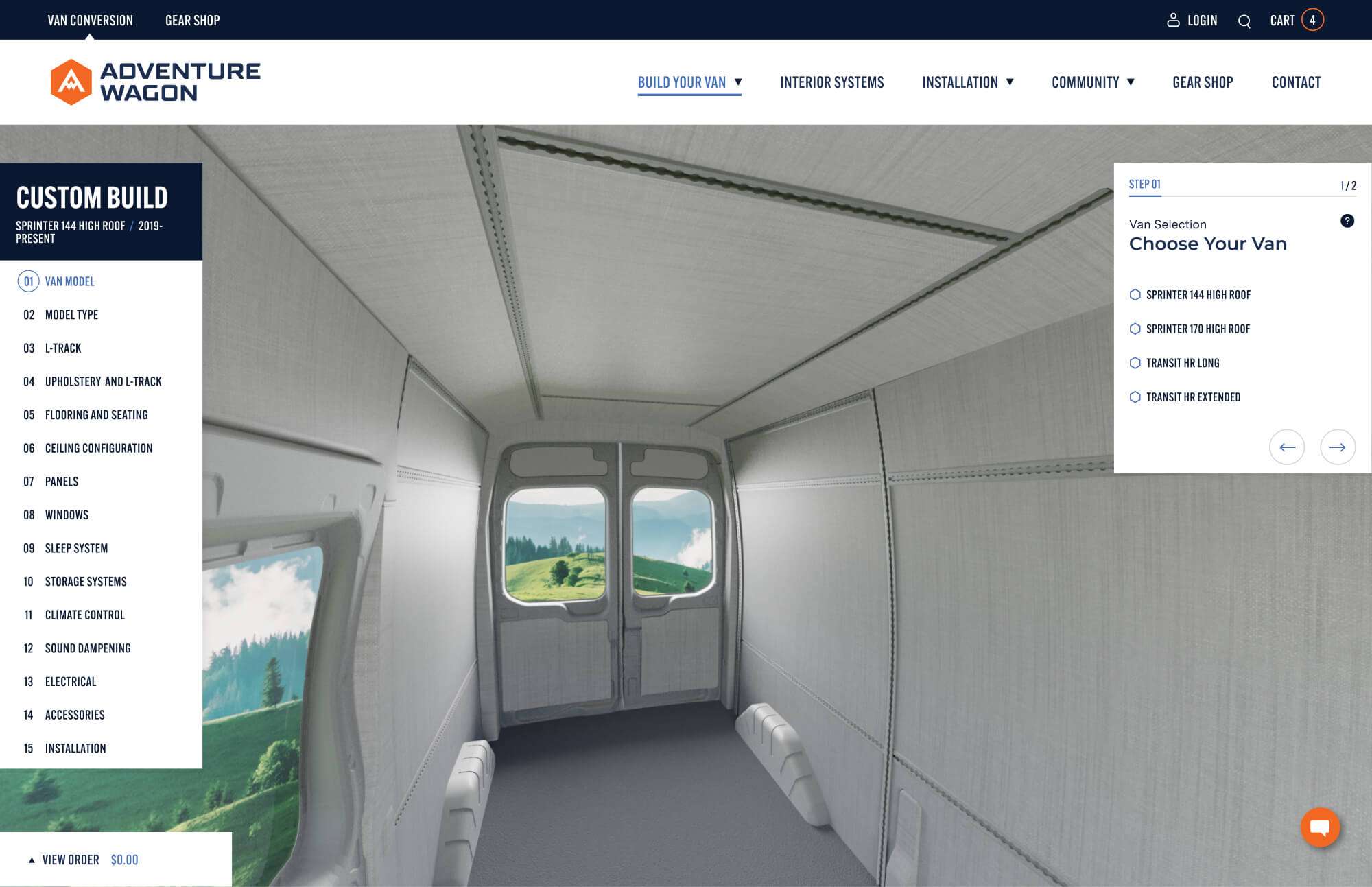
Inside the configurator, there are an overwhelming number of decisions to make, each with complex technical considerations.

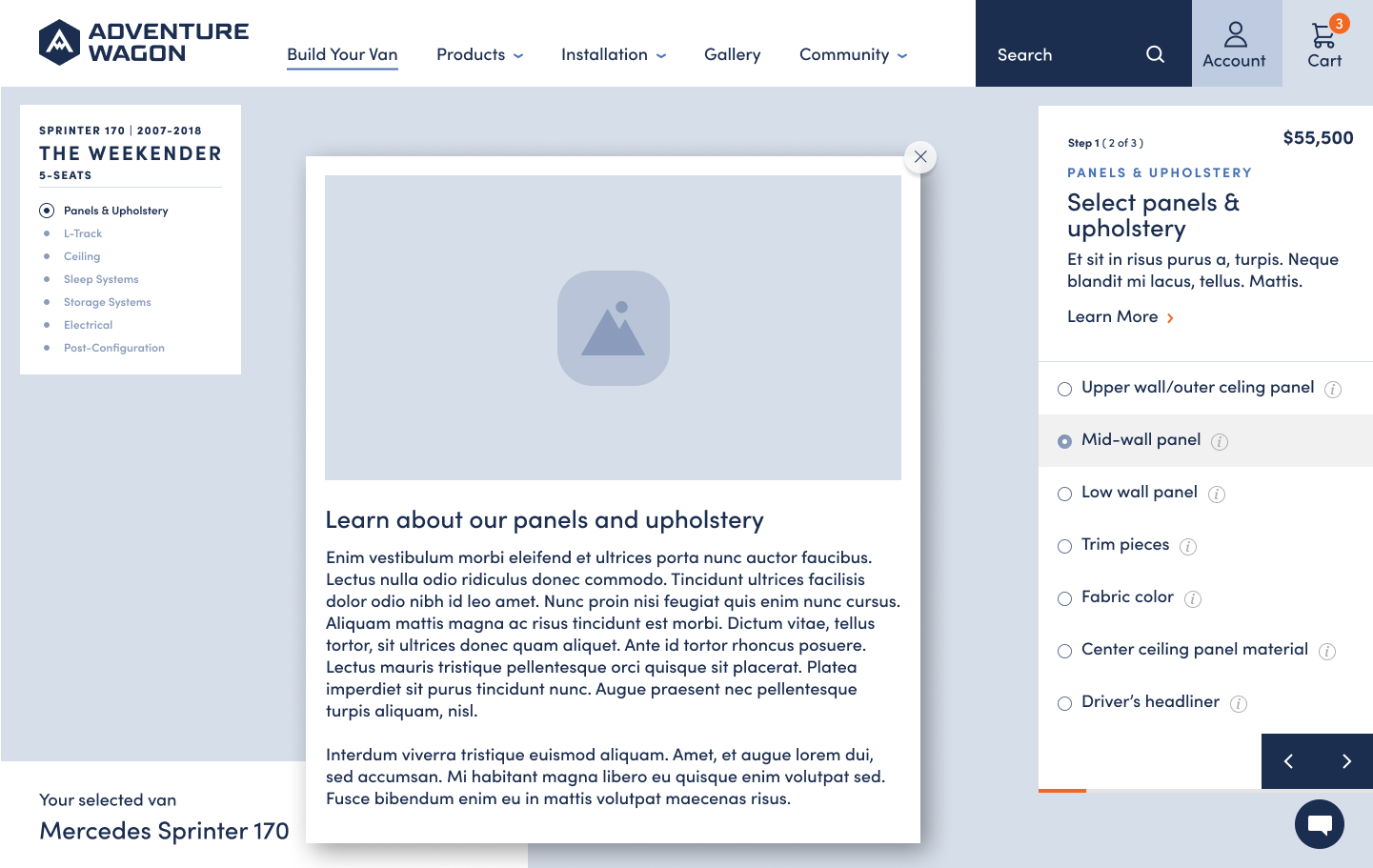
We added a subway navigation to provide a clear overview of the build process, also allowing users to follow a linear path or skip around. If a customization is causing friction, it can be skipped and returned to later.

In the selection panel to the right, critical decision-making information is visible by default, while supplementary details live in modals, reducing cognitive load without hiding complexity.

3D Renderings

One technical consideration was the performance of the configurator with all of the rendering options. The ideal solution would’ve been a true 3D model, with the ability to pan, zoom, and rotate within the build. However, we identified a lot of performance issues in this approach when interacting with configurators in adjacent industries (custom bikes, car dealerships).

We instead opted for a model that was technically 2D but gave the appearance of 3D. We partnered with digital artist Samuel Costa to render all possible configuration permutations in a 3D perspective.

The result maintained the integrity of a true 3D experience, allowing realistic visualization of how components and finishes would appear inside the space. This was critical in elevating the customization process into something aspirational and interactive rather than a transactional form.

Reorienting Around the Real Audience

From the start of the project, Adventure Wagon came to us with pre-configured packages, each compatible with a couple of vans. The client noted there were some compatibility complications and expected us to design an elegant solution, but had underestimated how significantly those incompatibilities would impact usability.

For example, selecting a Weekender package with a cargo van is straightforward. Selecting a Weekender with a crew van requires adding seats, which mandates Smart Flooring, which in turn requires professional installation.

Rather than designing around these complications, we referred back to our original goals: reducing complexity for customers who were already coming to Adventure Wagon to combat technical overwhelm. Accommodating the incompatibilities would have undermined that goal regardless of how cleanly we executed it.

Instead, we repositioned the packages entirely. Rather than vans for packages, it became packages for vans: one dedicated package per van, optimized for that van’s specific use case.

The original structure may have served people who didn’t yet own a van and were exploring their options. At first glance any traffic is good traffic, but those visitors weren’t converting. Adventure Wagon’s real audience had already made their van purchase, and like any vehicle purchase, they chose that van because it fit a specific need. A Sprinter 170 buyer is thinking about overlanding. A Ford Transit buyer is making a more economical choice.

Optimizing each package for one van meant customers arrived to find an option already tailored to the life they were building.

The Process

Expansion & Refinement

Add-Ons

Post-launch behavior showed that once users completed their van configuration, they were highly committed and open to extending their build. Based on this insight, we introduced a small set of recommended add-on products at the end of the configurator. These “quick add” items allowed for easy upsells without reintroducing decision fatigue or disrupting the core build flow.

Gear Shop

We then identified a separate need for a more traditional ecommerce experience for customers browsing gear outside of a van build. This led to the creation of a standalone Gear Shop, designed for discovery, comparison, and repeat purchases.

We unified navigation and checkout across the configurator and Gear Shop, allowing users to move between customization and shopping seamlessly while maintaining a cohesive purchasing experience.

Homepage Conversion Optimization

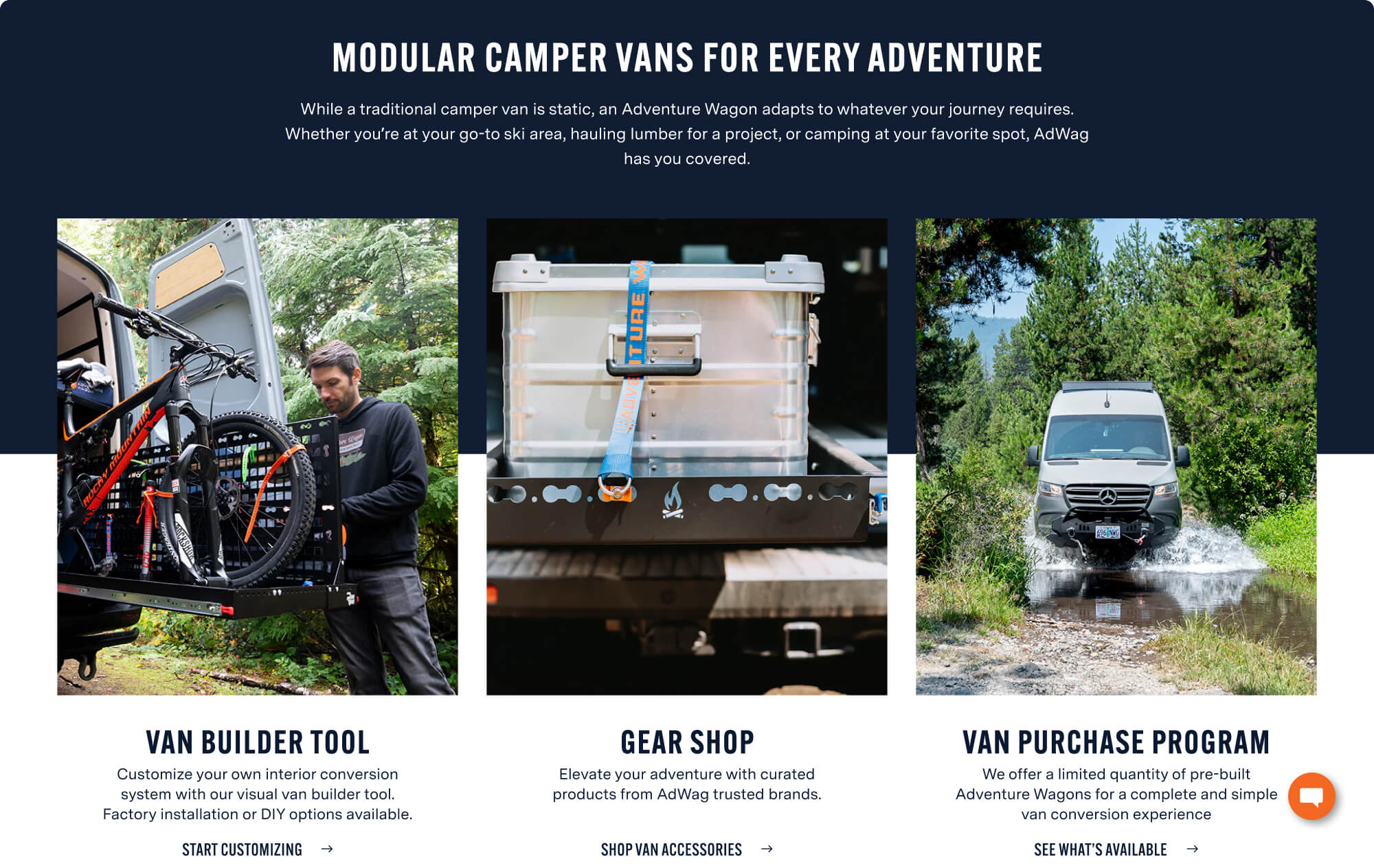
As part of our ongoing engagement with Adventure Wagon, I conducted a conversion optimization audit of their existing homepage and delivered a set of targeted recommendations. Updates focused on streamlining navigation, improving CTA visibility and specificity, surfacing all three of Adventure Wagon’s core offerings early in the page, and adding trust-building elements to encourage deeper engagement. The goal was to reduce confusion about what Adventure Wagon offers and create clearer paths to conversion across all entry points.

The Results

How it all came together.

Scroll to Top