Scratch & Peck Feeds
eCommerce Website
Scratch & Peck Feeds is a premium organic feed company serving backyard chicken owners, experienced homesteaders, and everyone in between. They came to us wanting to extend their reputation for education and customer support into their eCommerce experience. Their customers ranged widely in expertise, their product catalog was complex, and new visitors (who made up 54% of revenue) needed guidance that wouldn’t slow down confident repeat buyers.
We designed an eCommerce experience that uses product discovery as a teaching tool, embedding education directly into the shopping flow rather than treating it as a separate step.

Overview
The Goals
- Increase ecommerce revenue by 20% in the first year
- Build trust and loyalty through education
- Help customers confidently find the right product and commit to subscriptions
My Role
My role on this project was UX strategy and structure. I owned the information architecture, wireframing, and client presentations. I also contributed to the design system and component library alongside our web designer who led the visual and UI design. Research and discovery were led by our strategy team. My work began where their findings left off, translating research insights into structural and interaction decisions.
The Outcome
In the first year after launch, Scratch & Peck saw growth across every key metric. The increase in product variations sold was particularly meaningful. It meant customers were finding a wider range of products suited to their needs, including bundles and seasonal items, rather than defaulting to the same familiar purchase.
+44%
Gross annual Sales
+24%
Average Order Value
+32%
Variations sold
The Process
Let’s get into it.
The Process
Research & Discovery
Our journey mapping workshop surfaced a finding that shaped the entire design strategy: organic search was driving 45.6% of traffic and outperforming direct traffic in revenue. New visitors accounted for 54% of revenue, but return visitors, who made up only 14% of traffic, converted at more than twice the rate.
This told us two things: First, most users arriving at the site were new and needed hand-holding. Second, converting new visitors into repeat buyers was the highest-leverage opportunity for sustainable revenue growth.
Across experience levels, one pattern held: customers needed reassurance they were choosing the right feed before committing to purchase. That insight became the foundation for every major design decision that followed.
The Process
Key Design Decisions
Filters as Education
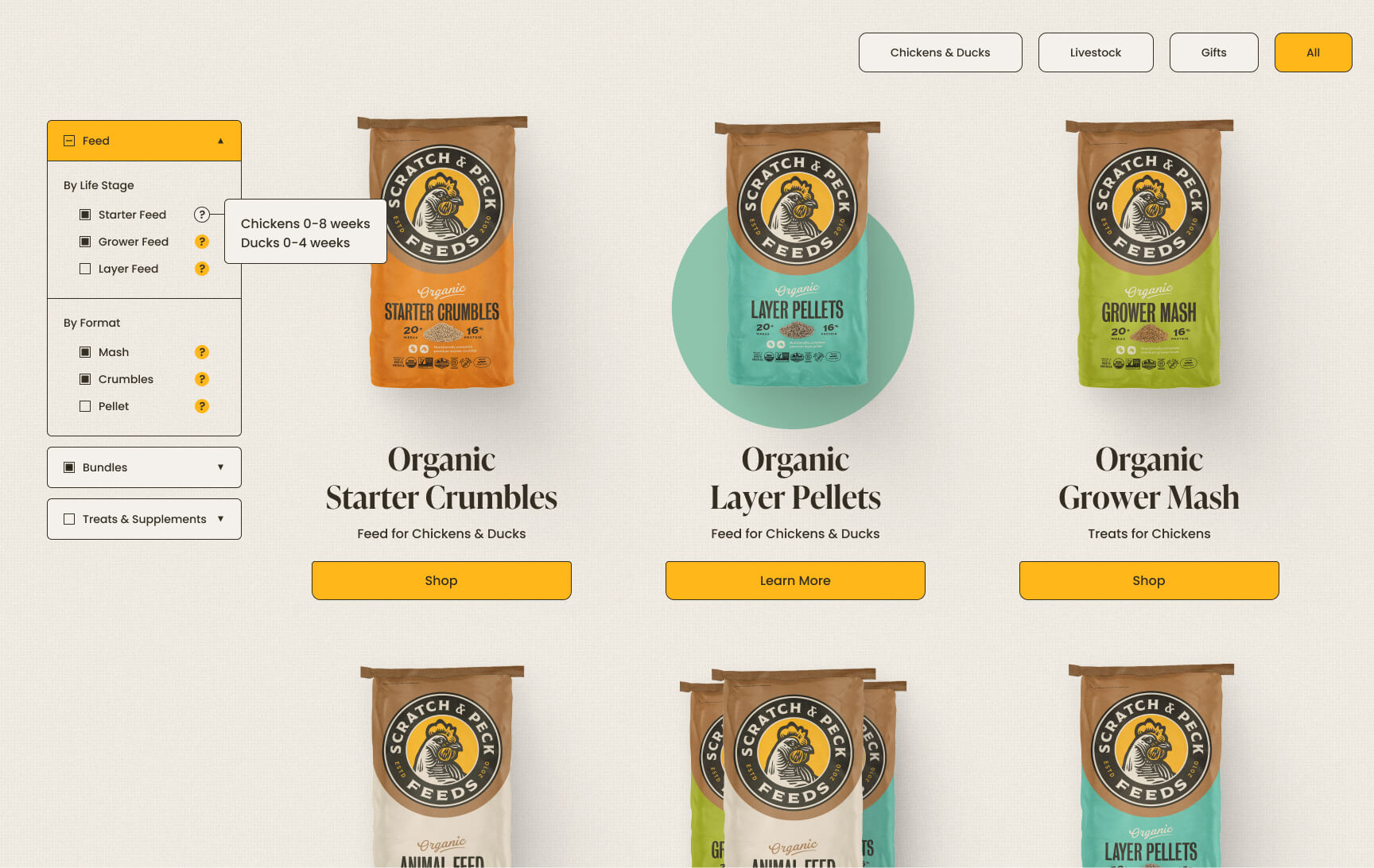
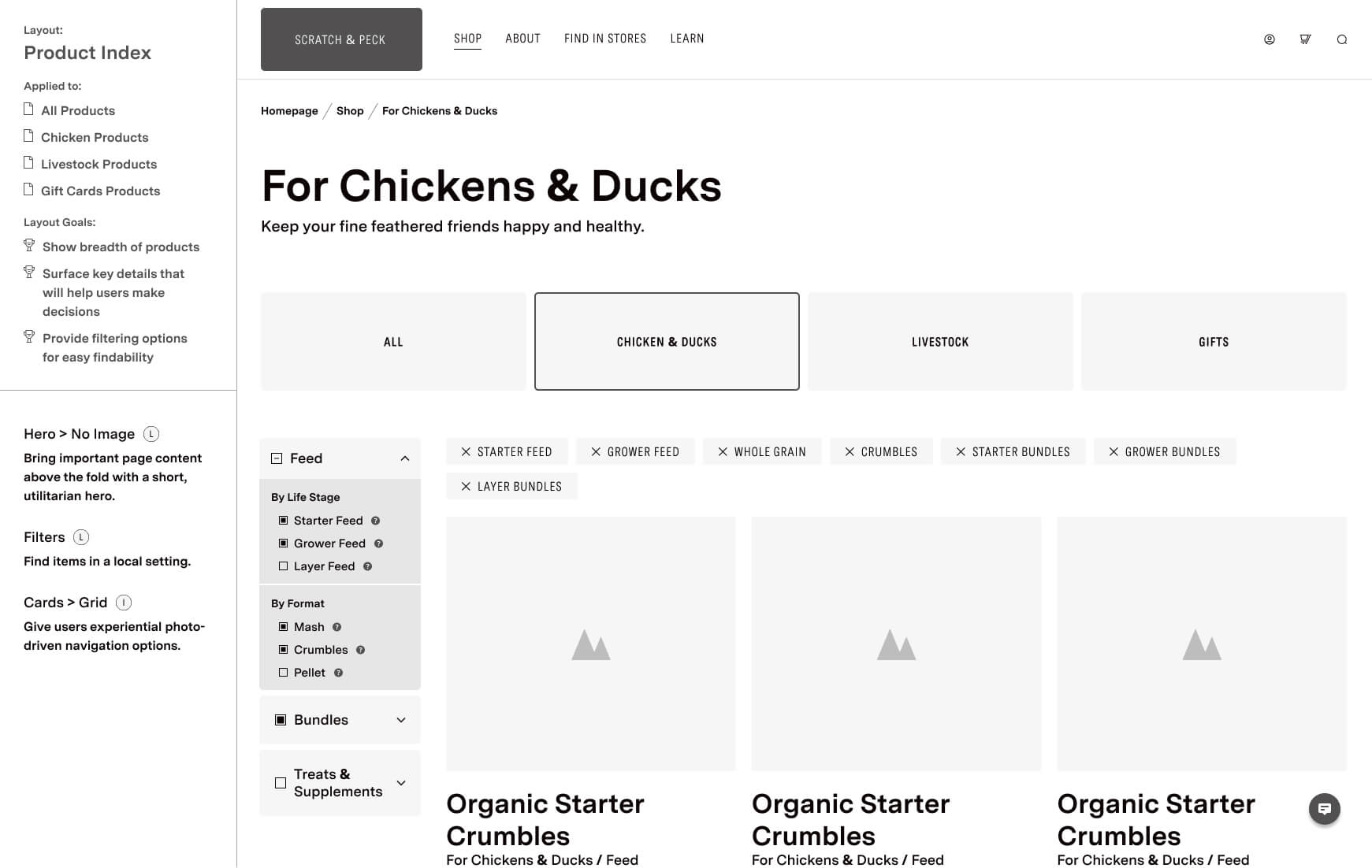
With 40+ products across species, life stages, and dietary values, product discovery was a primary friction point. We built a filtering system designed to teach while it narrows.
Filters double as educational tools, helping customers understand feed types, growth stages, and livestock compatibility without leaving the shopping flow. Tooltips offer just-in-time clarification (like species-specific age ranges within starter, grower, and layer feeds) without slowing down experienced buyers.
Progressive Disclosure on Product Pages
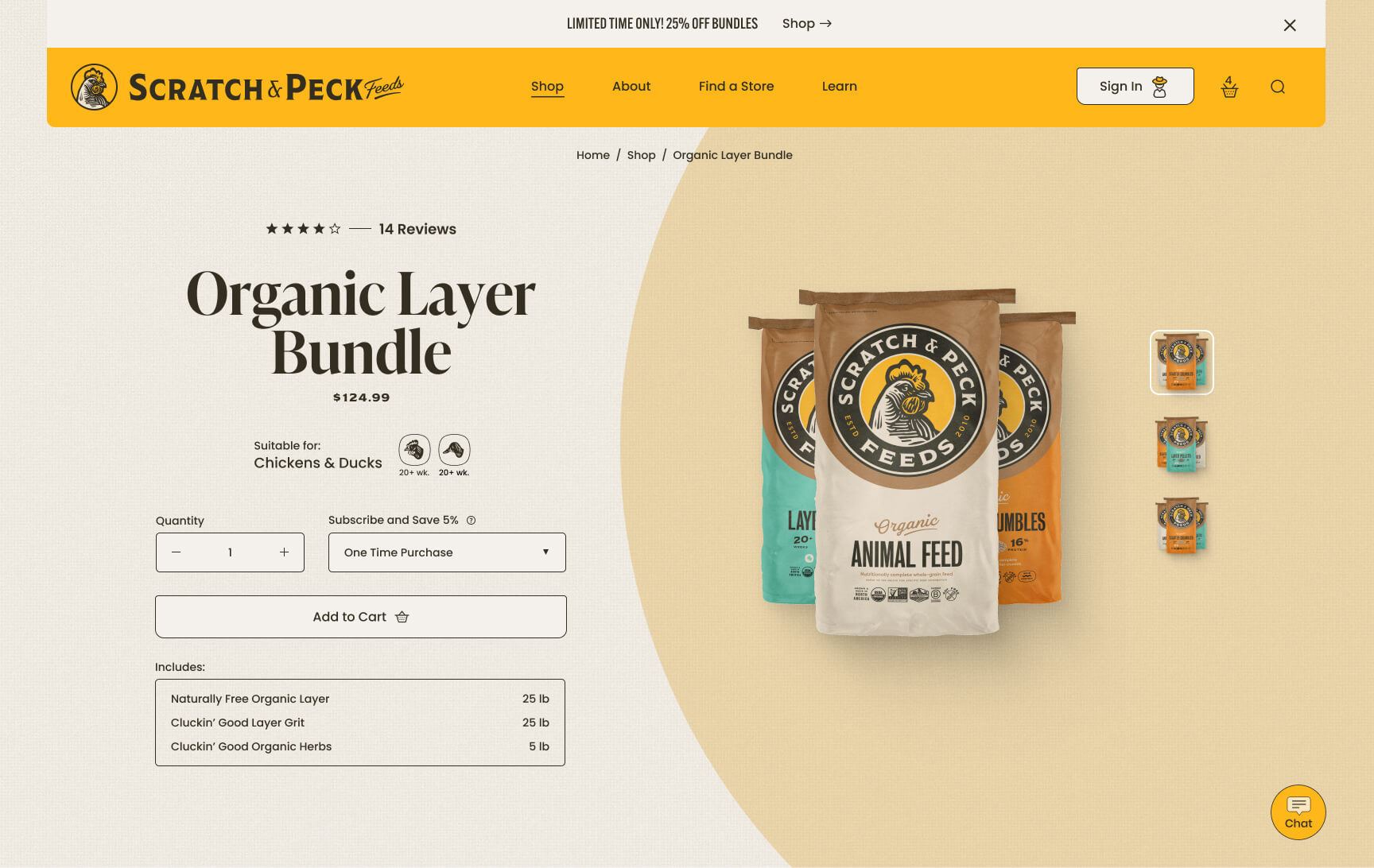
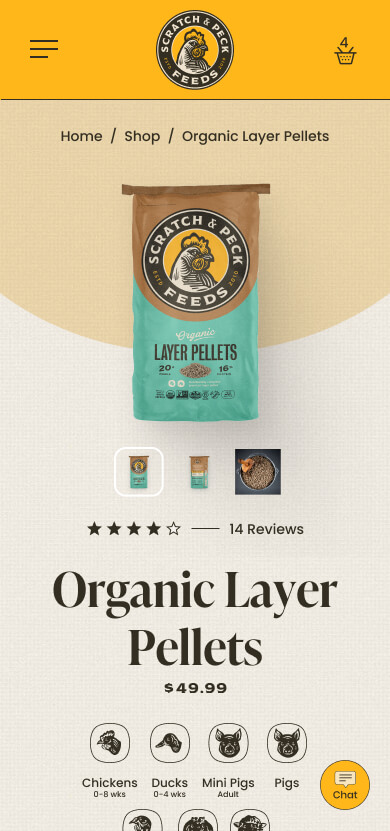
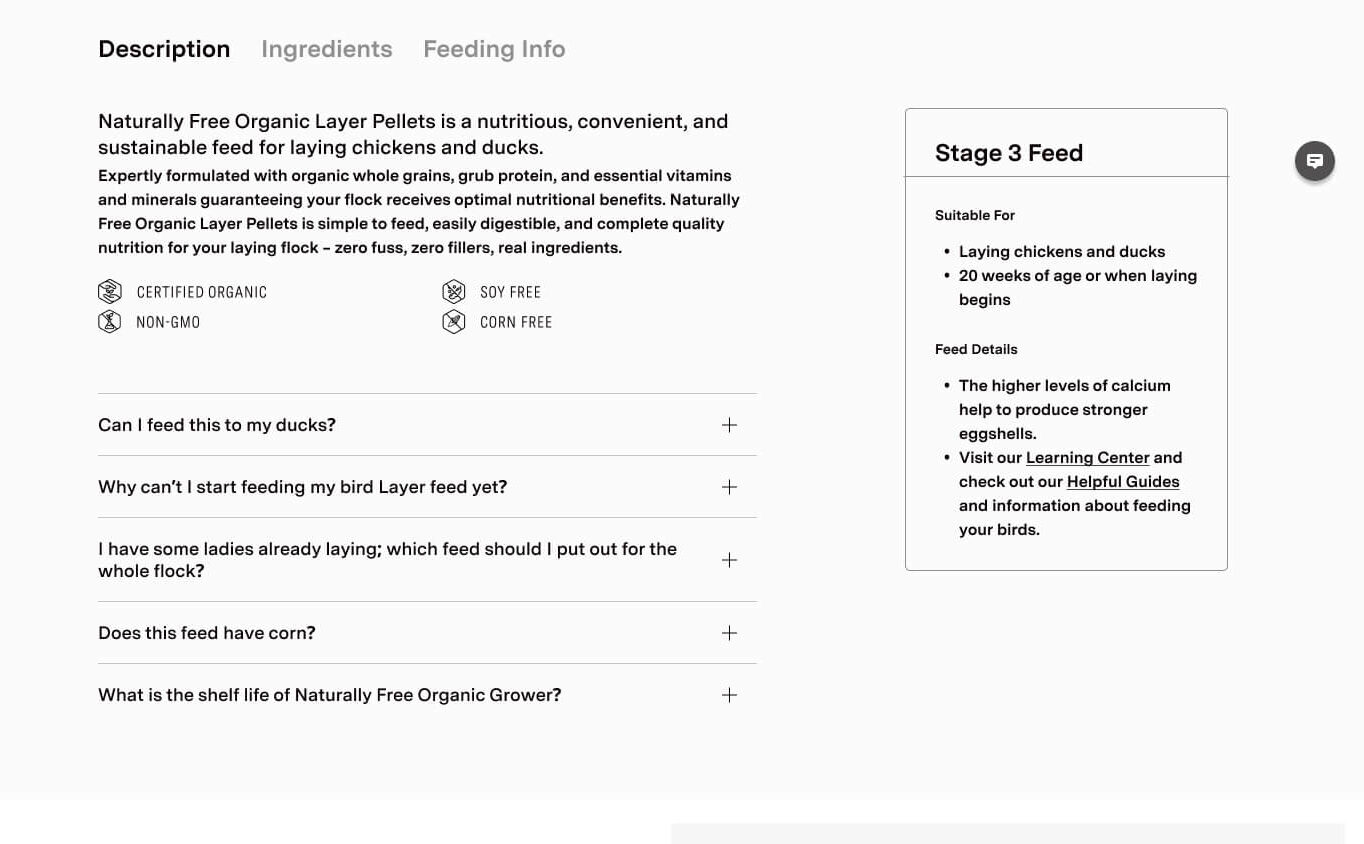
Product pages were structured to serve multiple experience levels simultaneously. The most critical decision-making information is surfaced immediately for confident shoppers. Deeper educational content (certifications, sourcing details, feeding guidance) is available for customers who need reassurance before committing.
One deliberate design was an ‘feed details’ confirmation box: a concise summary of key product attributes designed to serve as a final check before purchase. The goal was to counter the overwhelm of a dense product page with a clean, scannable summary. Keeping it concise required sustained negotiation with the client, who wanted to add marketing copy and supplementary details. Keeping it concise against client pressure was one of the more consequential design decisions on the project.
Visual Systems
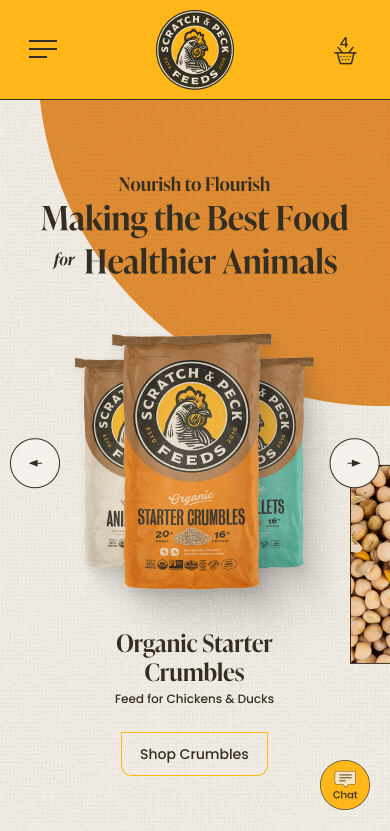
We echoed the colorway system from Scratch & Peck’s product packaging and introduced an icon set to quickly signal livestock suitability and product attributes. This reinforced recognition and consistency across the site, helping customers orient quickly regardless of how they arrived.

Learn-to-Product Integration
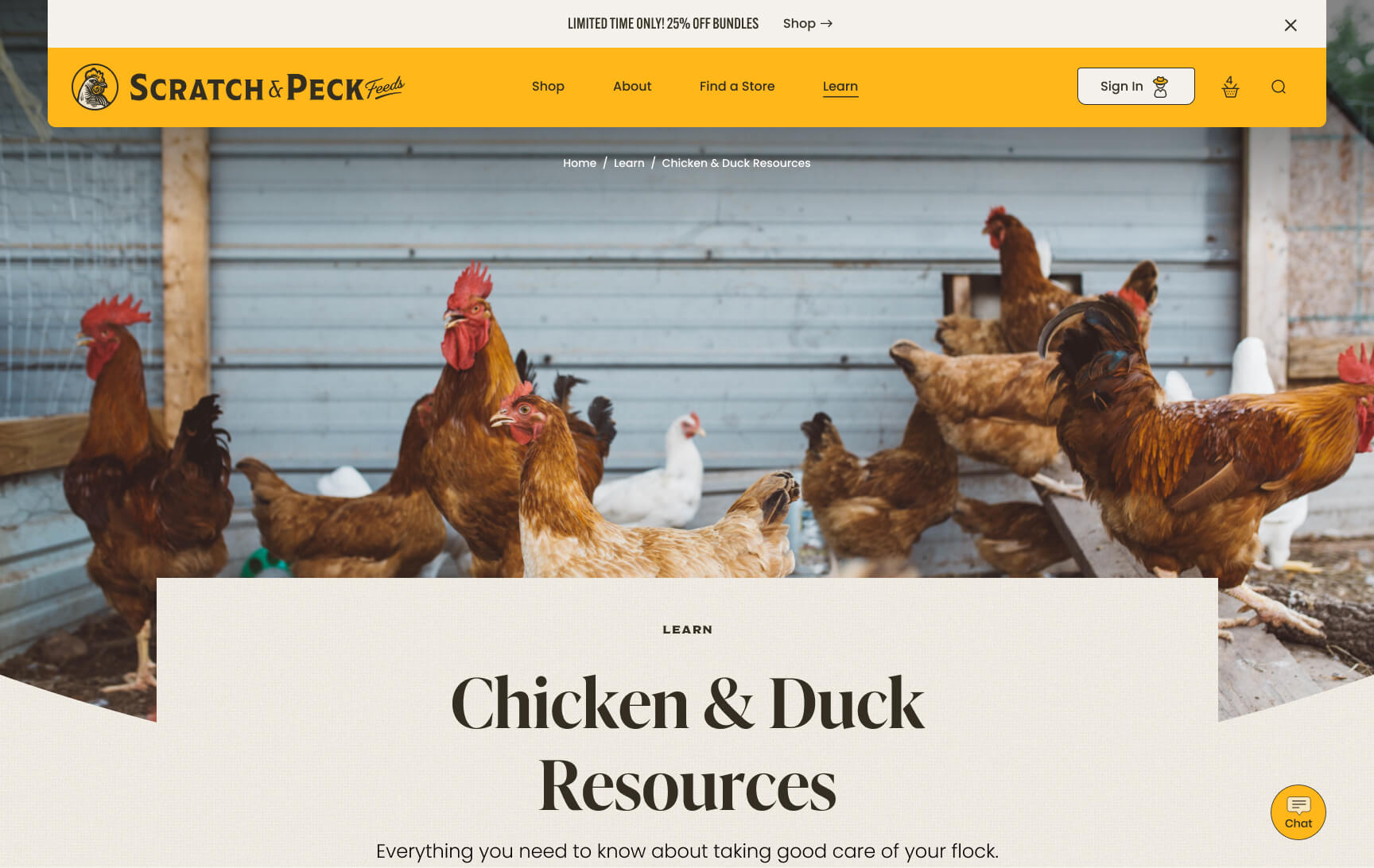
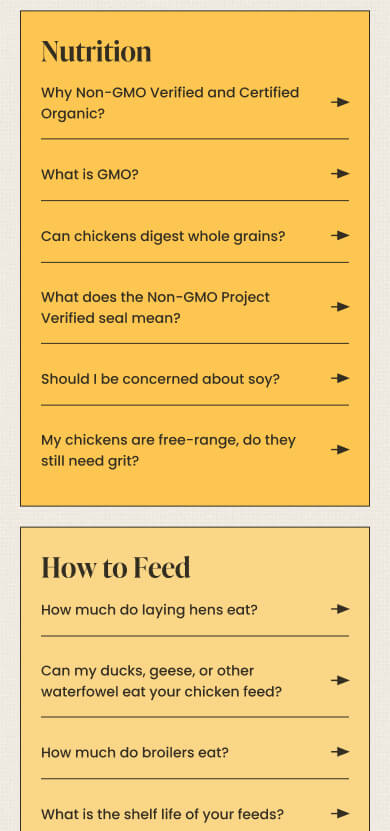
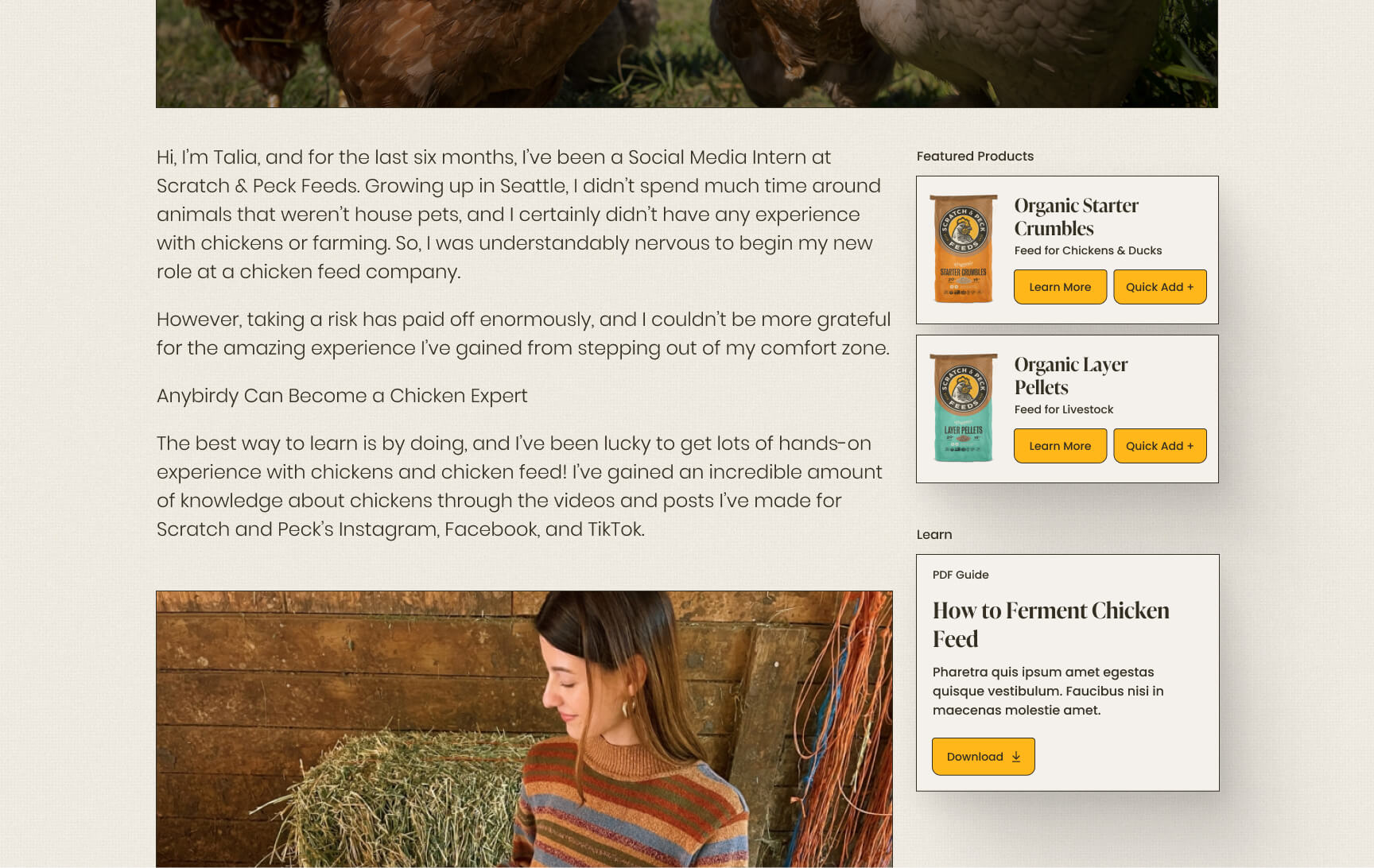
To support Scratch & Peck’s goal of being a trusted educational resource, we connected their Learn section directly to product pages. Customers arriving through articles on feeding techniques or seasonal nutrition could transition seamlessly from research to purchase, seeing the specific products that addressed the challenges they’d been reading about. This closed a meaningful loop between content and commerce.
Post-Launch
User Feedback & Analytics
Customers have noted the depth of educational resources on the site, and cross-promotion of related products has driven discovery of seasonal and life-stage-appropriate items they wouldn’t have found otherwise.
The Results
How it all came together.